Xen Hypervisor Flaws Let One Malicious VM Read and Write Any Other VM's Memory
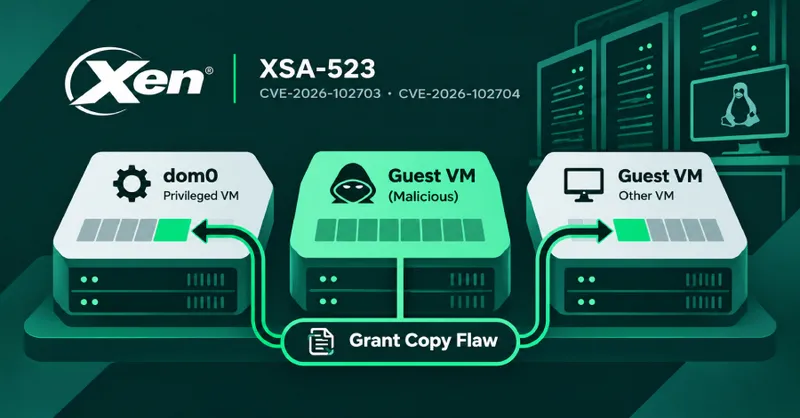
Two critical flaws in the Xen hypervisor allow malicious virtual machines to read and write memory of other VMs on the same host, including privileged dom0.
The Xen Project disclosed two critical vulnerabilities on November 3, tracked as XSA-523 and assigned CVE identifiers CVE-2026-102703 and CVE-2026-102704. These flaws affect all Xen versions from 4.6 onward, potentially allowing a malicious guest VM to access memory of other VMs, including dom0—the privileged management VM with full system permissions.
Vulnerability Details
The vulnerabilities exist in Xen's grant copy operation, which manages data sharing between VMs. The flaw occurs when Xen reuses permission checks for batch copies within the same memory page without revalidating them in certain cases. This oversight enables a malicious VM to access memory it shouldn't have access to.
a single compromised guest can break out of its isolation and take over the whole host
Affected Platforms
Multiple virtualization platforms built on Xen are affected, including XCP-ng and Qubes OS. XCP-ng has rated the impact as Critical, while Qubes OS noted that all supported releases and configurations are vulnerable. Debian's security tracker has also confirmed vulnerabilities in its xen package across multiple releases.
Available Fixes
Patches are available for Xen versions from 4.17 to xen-unstable, with specific fixes for each version range. However, no patches exist for versions 4.16 and earlier, as security support for 4.16 ended in December 2024. XCP-ng 8.3 and Qubes OS 4.3 have released fixed packages requiring host reboots, with Qubes users needing to reseal secret passphrases.
The Xen Project emphasized that these vulnerabilities are separate from XSA-500, a previous grant copy flaw disclosed in July. Users are advised to apply patches promptly, as no known mitigations exist for these flaws.
Related
