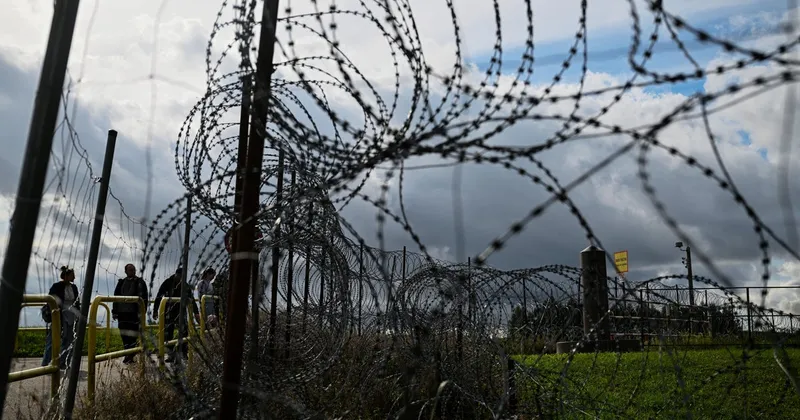
Poland launches major security operation along border with Russia
Poland deployed security forces along its border with Russia's Kaliningrad exclave this week, potentially preventing a sabotage or provocation operation targeting the NATO member.
The operation, which began Monday and will run at least until November 8, involves additional police and counterterrorism units as well as troops from Poland's elite military special forces unit GROM. National police chief Marek Boroń confirmed the deployment in response to intelligence warnings of possible sabotage operations and provocations during the first half of November.
Polish authorities had already been on high alert before the operation began, with warnings pointing specifically to possible border incursions by armed groups along Poland's border with Kaliningrad, including in the strategically important Warmia-Masuria and Podlaskie regions.
Intelligence Warnings
Prime Minister Donald Tusk revealed Tuesday that suspicious movements were observed overnight near Kaliningrad, including individuals carrying flashlights close to the border area. He suggested that the quick reaction by Polish security forces may have prevented an unspecified provocation.
We very quickly mobilized the necessary security forces and means on site, and we successfully prevented any attempted acts of provocation, if that was the intention. Of course, we will never be able to completely confirm that.
Strategic Importance
Russia's Kaliningrad exclave, bordered only by NATO members Poland and Lithuania and the Baltic Sea, holds considerable military and strategic significance. To the immediate east lies the Suwałki Corridor — the only land border connecting the Baltic NATO states with the rest of the alliance.
Polish authorities have not published evidence of specific plans for an attack, but the alert follows months of sabotage, air incursion and other low-level incidents across Europe blamed largely on Russia.
European Context
The operation comes amid increasing concerns about Russian hybrid warfare tactics across Europe. In October, Tusk discussed these threats with NATO Supreme Allied Commander Alexus Grynkewich, while Britain's MI5 chief Ken McCallum labeled Russia "aggressor number one" in state threats.
McCallum noted that Russia was "being careful to stay below the NATO Article 5 threshold" with its actions, which would trigger the alliance's collective defense principle. Recent incidents attributed to Russia include a fire at a Polish military components factory and an arson attack on a Starlink satellite station.
This week, the UK Royal Navy intercepted a Russian spy ship off Scotland's coast that was monitoring a NATO exercise. Polish authorities continue to monitor the situation closely, with the special command center at national police headquarters coordinating the ongoing security operation.
Related
