Ukraine: Oleshky ceasefire ends, Russian attacks continue
The longest truce in Russia's invasion of Ukraine, limited to the southern Kherson region around Oleshky, ended on November 1 after Russia refused to extend the six-day ceasefire.
The longest truce in Russia's invasion of Ukraine, limited to the southern Kherson region around Oleshky, ended on November 1 after Russia refused to extend the six-day ceasefire. Ukrainian officials confirmed the ceasefire had expired, with Russia declining an offer from Ukraine to extend it.
The truce, which began on October 27, was described by Ukraine's Parliament Commissioner for Human Rights Dmytro Lubinets as "an important step in our joint humanitarian efforts" with Russia. One Ukrainian lawmaker called it the "biggest de-escalation since 2022."
Local residents in the Kherson region had welcomed the ceasefire as a "breath of fresh air." A 38-year-old gardener named Volodymyr Omeltchenko told AFP they were using the time to prepare for winter, saying We have to use this time to get things done. We're pruning the rose bushes for winter.
Russian forces prepare for intensified fighting
A Ukrainian military officer, speaking on condition of anonymity, expressed concern that the fighting would be "worse than before" when it resumed. The officer said Russian forces had taken advantage of the calm to amass new troops and ammunition stocks, and collect intelligence on Ukrainian positions.
Humanitarian efforts during the truce
During the ceasefire, the Ukrainian military evacuated 167 civilians from the partially occupied southern region of Kherson, including 22 children and 21 people with limited mobility. Around 2,000 civilians were in Oleshky when the ceasefire took effect, with given the choice of leaving or staying.
Local governor Olexander Prokudin called on residents to remain alert and warned people not to approach areas close to the Dnipro river, where Russian drone and artillery strikes remained high intensity despite the truce.
International response and diplomatic efforts
US President Donald Trump called for the ceasefire to become the "starting point for lasting peace," saying it provided residents with "freedom to move, access to food, clean water, medicine, plus a renewed sense of dignity." Pope Leo XIV, who had pressed Russia to agree to the truce, hoped it would "strengthen the desire for dialogue and lead to new concrete peace initiatives."
Meanwhile, Ukrainian President Volodymyr Zelenskyy met with Turkish counterpart Recep Tayyip Erdogan in Istanbul to prepare for a three-way summit between Ukraine, Russia and the United States planned for November. Zelenskyy also discussed establishing a Black Sea grain corridor with Erdogan.
At the G20 summit, foreign ministers from Western countries refused to take part in a traditional group photo with Russia's Sergey Lavrov, with US Secretary of State Marco Rubio canceling the event due to the boycott. Russia's diplomatic isolation from many Western countries overshadowed the summit.
Attacks continue outside Kherson
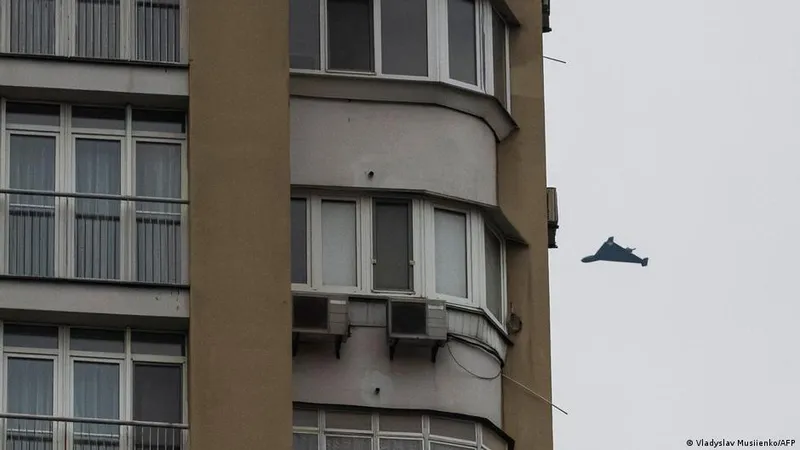
Despite the ceasefire in Kherson, Russian attacks continued elsewhere in Ukraine. A drone attack on Koziatyn in central Ukraine killed at least three people and injured four others, including three children. In the western region of Chernivtsi, one person was injured and an administrative building was severely damaged.
Hundreds of thousands of households lost electricity after overnight Russian strikes hit energy infrastructure in four Ukrainian regions, according to President Zelenskyy. He accused Russia of exploiting Ukraine's shortage of interceptors used to shoot down ballistic missiles and called on allies to deliver more air defense systems immediately.
Related
