NVIDIA Is Reportedly Eyeing Teflon, The Non-Stick Cookware Material, To Fix AI Server Signal Loss In Next-Gen NVLink Switch Boards - Wccftech
NVIDIA is reportedly exploring the use of PTFE, commonly known as Teflon, to address signal loss issues in next-generation NVLink switch boards for AI servers.
Current AI chips face transmission bottlenecks when pushing 200Gbps per lane, where even minor interference impacts performance. To address this, NVIDIA is reportedly considering PTFE, better known as the non-stick coating on cookware, for its next-gen NVLink switch boards.
Signal Loss Solution
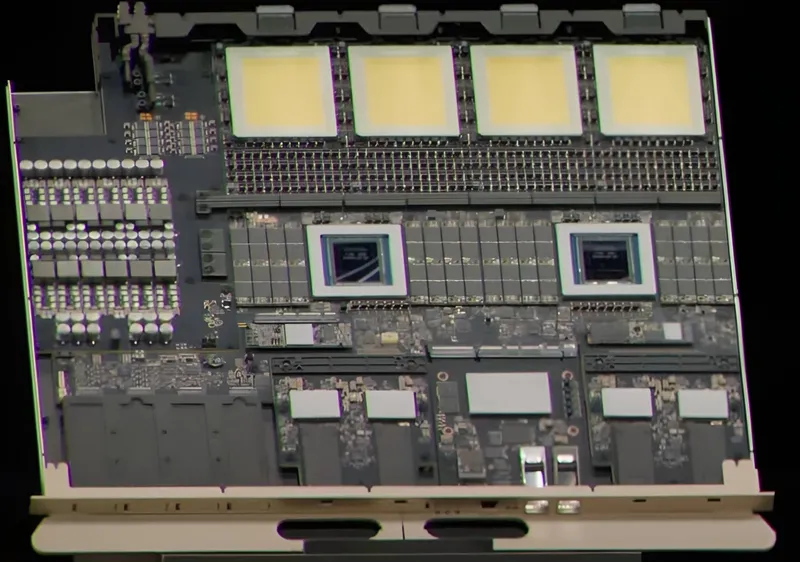
PTFE wastes far less signal energy than traditional resins used in circuit boards, making it an attractive option for NVIDIA's upcoming Rubin Ultra switch board. The material was showcased at this year's TPCA Show after NVIDIA displayed its latest NVLink switch board at the OCP summit in early October.
With AI boards reaching 70-plus layers, even top-grade M9 material falls short, leaving Teflon as a logical choice. An industry analyst noted that PTFE could enable high-speed switching directly on the PCB instead of through complex copper cables.
Technical Challenges
Despite its advantages, PTFE presents significant manufacturing hurdles. Its non-stick nature bonds poorly with other materials, making it difficult to create boards with multiple layers. The material is also thin and soft, making it harder and costlier to process than conventional resins.
Industry estimates put overall production yields below 5 percent, with PTFE still in the sample stage. An industry chairman questioned why nobody had used PTFE in circuit boards for 30 years, suggesting NVIDIA's interest might stem from high-end laminate shortages rather than technical merit.
Future Outlook
Despite skepticism, many of NVIDIA's partners across China, Taiwan, and the U.S. have reportedly secured equipment capable of handling PTFE. An analyst predicted the processing bottleneck could be solved within two years, though a clear outcome isn't expected until 2028-2030.
PTFE has historically been used in military radars, satellites, and automotive ADAS radar systems, but has been limited to antenna-type applications due to its material properties.
Related
