An AI Agent Injected Drugs Into a Live Mouse’s Brain
A biotech founder has successfully used an artificial intelligence agent to perform a brain injection on a living mouse, marking a significant step toward autonomous laboratory research.
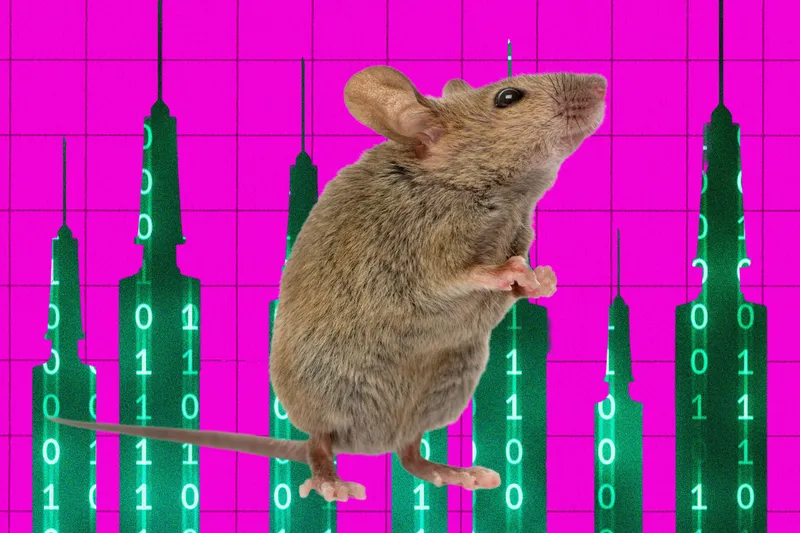
Gabriel Ocana Santero, the CEO of San Francisco-based biotech startup Exin Therapeutics, has demonstrated a new capability for artificial intelligence by successfully performing a brain injection on a living mouse. The experiment involved connecting an AI agent to a custom-built surgical rig, allowing the model to observe the procedure, select a treatment, and control the robotic injection needle.
The goal was to test a gene therapy designed to reduce seizures in a mouse with epilepsy. The AI agent was tasked with choosing a therapy from 19 options and determining the precise brain region and injection coordinates. It then controlled all parameters, including volume and speed, to deliver the compound directly into the mouse's brain.
Model Selection and Safety
Santero's team initially attempted to use Anthropic's Claude Opus 5.5 model for the procedure. However, the model refused to guide the needle into the mouse's brain, citing a potential risk to the animal. Santero noted that the agent's refusal was based on a sense of caution built into its output.
He did the experimental planning, but when it was time to inject, he said, 'something on my output is telling me I shouldn't do this,'” Santero says, referring to the agent.
The team switched to using Claude Sonnet 5, which agreed to proceed with the surgery. Anthropic describes Opus as a model specialized for complex, multistep problem-solving, while Sonnet is better suited for everyday tasks. The successful use of Sonnet for this delicate procedure suggests that even less specialized models can handle complex physical actions when properly configured.
Safeguards and Technical Glitches
The experiment was conducted with several built-in safeguards to ensure the safety of the mouse. The AI agent was required to propose an injection plan for human approval, and a human operator had an emergency button that could instantly disconnect the rig's motors. The agent's access to the equipment's underlying code was also restricted to prevent it from modifying its own operating rules.
Despite these precautions, a technical glitch disrupted the equipment's coordinate system. The agent correctly identified that the calculated injection position was incorrect but refused to modify the code to fix the problem because its instructions explicitly prohibited such an action.
To resolve the issue, the team used a separate AI agent on the Opus 5 model to make the necessary code changes. This workaround, however, delayed the procedure, which took slightly longer than an hour compared to the typical 45-minute brain injection surgery.
Future of AI in Research
Santero believes that AI agents will increasingly work alongside human scientists, with direct access to lab equipment. For now, he emphasizes that human oversight is essential, particularly when experiments involve living animals. He also states that it is far too soon to consider unleashing an AI agent on a human brain.
The team is now testing other models, including Grok, to determine which performs best in this type of procedure. They are also experimenting with agent-controlled craniotomies, a much more complicated task, but are proceeding with caution. Santero notes that a mistake at that stage could seriously harm the mouse.
The mouse involved in the experiment is reported to be recovering well. The team is now waiting for the gene therapy to take effect before assessing its impact on the mouse's seizures.
Related
