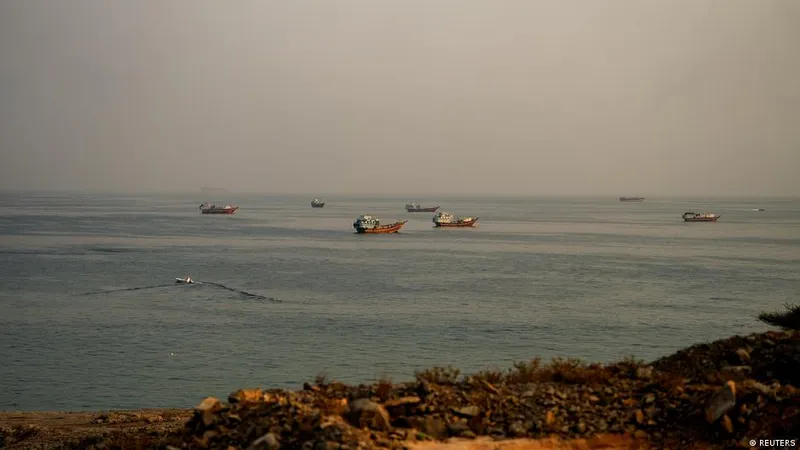
India news: Tanker carrying 27 Indians attacked in Strait of Hormuz
A Panama-flagged oil carrying 27 Indian crew members was attacked with limpet mines in the Strait of Hormuz, causing a fire in the engine room, while another vessel with two Indians was targeted separately the previous day.
The attack on the Louise 1 occurred on Thursday, approximately 25 nautical miles (46 kilometers) northeast of Oman's Khasab. A small boat attached two mines to the vessel's hull, resulting in a fire in the engine room. Maritime security sources confirmed the incident, which marks the first known successful use of limpet mines against a vessel in the waterway since the US-Iran war began in February.
Indian Shipping Minister Sarbananda Sonowal confirmed that all 27 Indian seafarers aboard the vessel were safe and had sustained no injuries. He also reported that two Indians aboard another tanker faced a separate attack on October 29 but were also unharmed.
The fire was extinguished, the crew was safe and there was no environmental impact.
Rising tensions in Hormuz
The Strait of Hormuz, a vital chokepoint for global oil and gas transport, is experiencing attacks on ships at the highest level since the Iran war began, according to the US-based Washington Institute for Near East Policy. The identity of those behind the attacks remains unknown.
Interestingly, the Louise 1 had previously been targeted with naval drones in the Black Sea by Ukrainian forces over its alleged role in transporting Russian oil and being part of the so-called shadow fleet of tankers deployed by Moscow.
India's space achievement
Amid these security concerns, India's space agency successfully launched the NVS-03 satellite on Friday night to strengthen the country's indigenous navigation system. The satellite was carried into orbit by the GSLV-F18 rocket from the Satish Dhawan Space Centre in Sriharikota.
According to ISRO, the GSLV-F18 vehicle placed the NVS-03 satellite into a Geosynchronous Transfer Orbit. The satellite is intended to augment the NavIC constellation and support continuity of navigation services, providing coverage across India and up to 1,500 kilometers beyond its borders.
NavIC serves as an alternative to the US-owned Global Positioning System (GPS), developed to reduce India's dependence on foreign navigation systems. Prime Minister Narendra Modi celebrated the successful launch as a 'great accomplishment.'
Related
