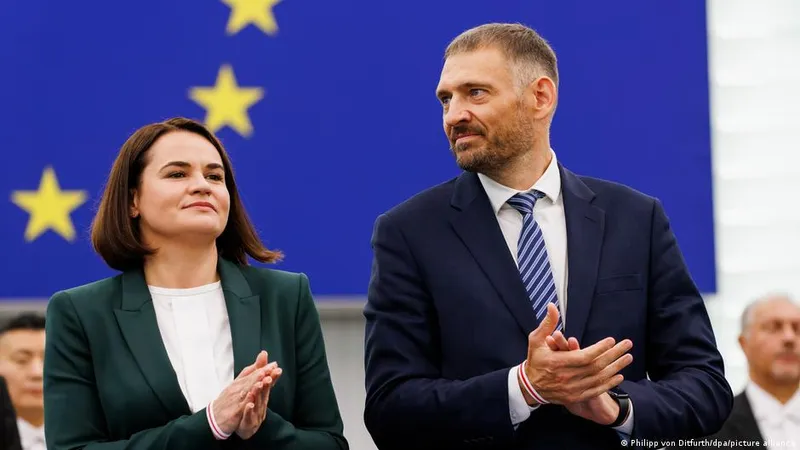
What the rift within the Tsikhanouski family means for the Belarusian opposition in exile
Blogger Siarhei Tsikhanouski has publicly criticized his wife Sviatlana Tsikhanouskaya and other Belarusian opposition figures in exile, creating a potential crisis for the democratic movement.
Blogger Siarhei Tsikhanouski, who was detained in Belarus in May 2020 after announcing his presidential candidacy against Alexander Lukashenko, has re-emerged in exile with sharp criticism of his wife Sviatlana Tsikhanouskaya and other opposition figures. Tsikhanouski, who spent nearly five years in prison before being released in June 2025 and forcibly removed from Belarus, has reactivated his YouTube channel where he targets not only the Lukashenko regime but also his wife's office, Belarusian media in exile, and political analysts.
Family Conflict
The Tsikhanouskis' personal and political rift has become public as Siarhei questions his wife's legitimacy. He claims she was merely a technical candidate who received votes only because she didn't pose a threat to the regime. Sviatlana Tsikhanouskaya was a so-called technical candidate, who received the votes of all those who were against Lukashenko, he said. The percentage of votes she received in the 2020 election was negligible because no one knew who she was.
What happens in the public sphere and what happens at home, are different things. I understand Siarhei's deep traumatization and also his very strong reactions to certain events.
New Opposition Structure
Tsikhanouski has proposed establishing a United Office of Democratic Forces with a supervisory board composed of former presidential candidates, protest leaders and iconic figures of the revolution, including himself and his wife. He claims such a body would have legitimacy granted by Belarusians rather than just from the European Union. The board would oversee the distribution of grant funds, though Tsikhanouski has refused to comment further on his goals, referring to his livestreams instead.
Leadership Crisis
Political scientist Yury Drakakhrust describes the situation within the democratic forces as a crisis. He notes that Tsikhanouski insists he was the key figure of the 2020 events and is entitled to recognition and invitations, but questions whether this helps the opposition today. Even if we assume that Tsikhanouski is right, that he was the central figure, what good would it do today? Drakakhrust asked.
Tsikhanouskaya has established significant assets, resources, and international status through her office, being received at high levels as a leader for Belarusian democracy. The Belarusian government reportedly views opposition disputes with irony, occasionally adding fuel to the fire, as internal conflict weakens the democratic movement's effectiveness against Lukashenko's 32-year rule.
Related
