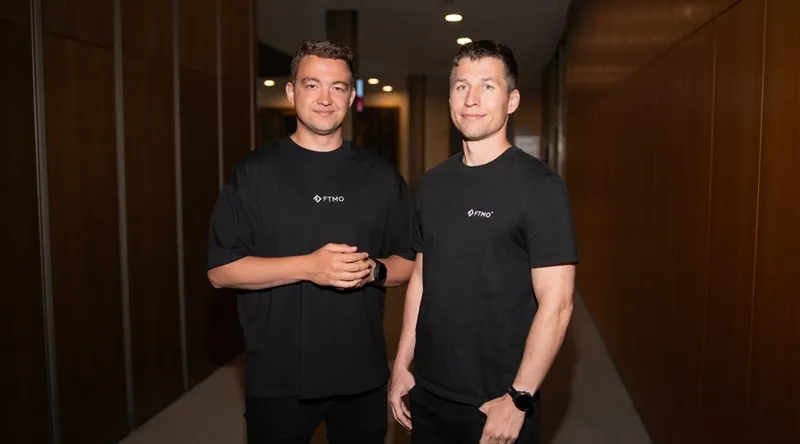
“An FTMO Ticker Sounds Really Cool”: FTMO’s Founders on Launching Futures and How the Prop Giant Made Bankers Like Them
Fourteen years after their university trading club days, FTMO founders Otakar Šuffner and Marek Vašíček have finally launched their futures trading platform, fulfilling their original vision.
Fourteen years after their university trading club days, FTMO founders Otakar Šuffner and Marek Vašíček have finally launched their futures trading platform, fulfilling their original vision. When they founded FTMO in 2015, they had to be pragmatic, building their business around CFDs due to the retail prop trading industry's infancy and their lack of capital and business experience for futures.
Futures Expansion
The launch represents a significant step in FTMO's broader strategy, which includes managing the acquisition of legacy broker OANDA, navigating regulatory challenges, and combating market volatility. The firm is treating futures as a core business rather than a side offering, requiring a dedicated team and substantial capital investment.
So the time basically came this year. I like to say that Apple is also not releasing their products first. So it just took time.
Competitive Pricing
Futures-based prop offerings have become increasingly popular due to their lower costs. Industry data shows a $100,000 futures evaluation costs approximately $190 on average, compared to about $420 for a similar CFD/FX evaluation. FTMO has adopted a traditional one-time fee structure rather than the subscription model common in the industry.
Šuffner noted that futures were "highly requested from our clients." The firm is now targeting established US competitors like Topstep while also serving international customers, which Vašíček found surprising given the US dominance in futures trading.
Brokerage Integration
We are always focusing on ourselves; we asked our clients what product they want to trade and we ended up with our current offering.
FTMO is developing a seamless progression path for users from funded evaluations to retail brokerage accounts and eventually professional ones. The firm initially explored acquiring smaller regulated brokers in Europe and Australia before building their brokerage arm organically, hiring industry veterans including ex-Skilling CEO Michael Kamerman in late 2024.
Related
