What to Know About China’s Top-Secret Spaceplane
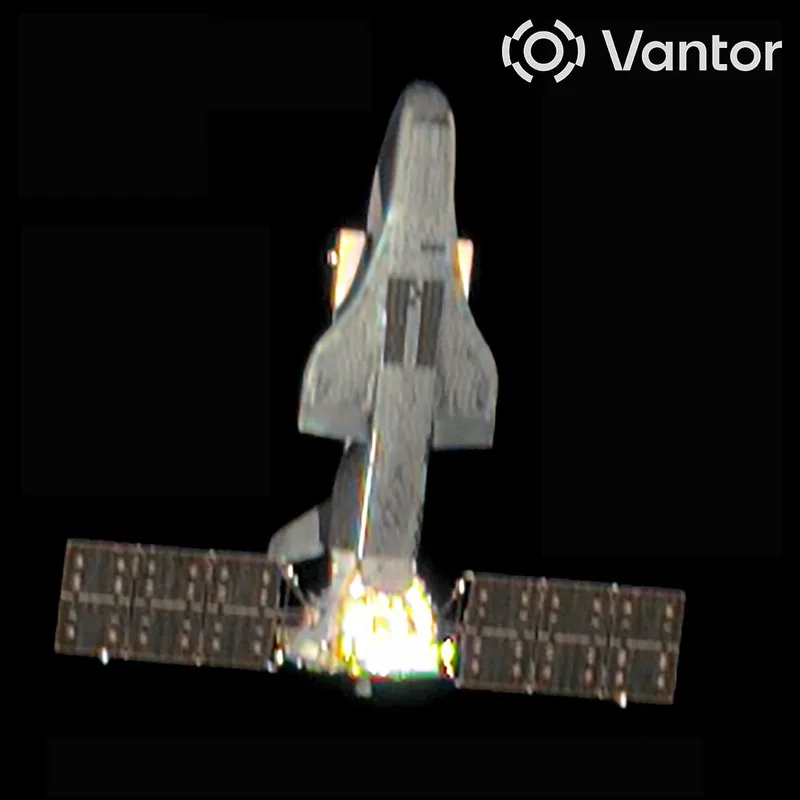
A Chinese spacecraft resembling the US military's X-37B spaceplane was photographed in orbit by a US-owned commercial satellite in 2024, with the image recently released by the Pentagon.
The Chinese spaceplane features delta wings, payload bay doors, a dark heat shield, and a rear-mounted service module with solar arrays, closely mirroring the design of the US X-37B operated by the Space Force. The photograph was captured by Vantor (formerly Maxar), a company that provides reconnaissance imagery to US military and intelligence agencies.
Lower-resolution images of the Chinese vehicle were previously available, but the Pentagon only released the full-resolution image in an unclassified DIA assessment of space threats to the United States. A US Space Force official first revealed Maxar's observation at a 2024 conference in South Korea.
Orbital Capabilities
China has launched four spaceplane missions since 2020, with durations of up to nine months. The fourth mission remains in orbit after launching in February. The Space Force operates two X-37Bs in rotation, with their longest mission lasting two-and-a-half years.
Both spaceplanes operate like unpiloted versions of NASA's Space Shuttle, launching inside rocket payload shrouds and landing autonomously on runways. The DIA notes that spaceplanes' enhanced maneuverability makes them suitable for certain missions beyond traditional satellites.
The enhanced maneuverability of spaceplanes makes them more suitable for certain missions than traditional satellites.
Catch and Release
China's spaceplane has demonstrated the ability to deploy and recapture objects in orbit. According to astrophysicist Jonathan McDowell's analysis of tracking data, the current mission released a sub-satellite in June, recaptured it in July, and repeated this process in August and September.
The Chinese vehicle's official name remains classified, though Western publications often refer to it as Shenlong. Chinese state media calls it Chongfu Shiyong Shiyan Hangtian Qi (CSSHQ), meaning reusable experimental spacecraft.
Space Weapons Race
The DIA report highlights China's development of anti-satellite technology, particularly directed-energy weapons (DEWs). China has multiple ground-based laser systems to disrupt satellites and may field space-based DEWs by the late 2020s.
China has also tested anti-satellite missiles, demonstrated satellite refueling in geosynchronous orbit, and developed a robotic arm for capturing spacecraft. The country operates a fleet of TJS satellites that routinely approach foreign spacecraft.
The US has acknowledged possessing orbital weapons, becoming the first nation to do so. Russia is pursuing its own orbital combat systems, including plans to deploy nuclear weapons in space and the Nivelir system designed to fire projectiles between satellites.
Related
