'Extremist right-wing ideologies' an increasing threat in France & 'across much of democratic world'
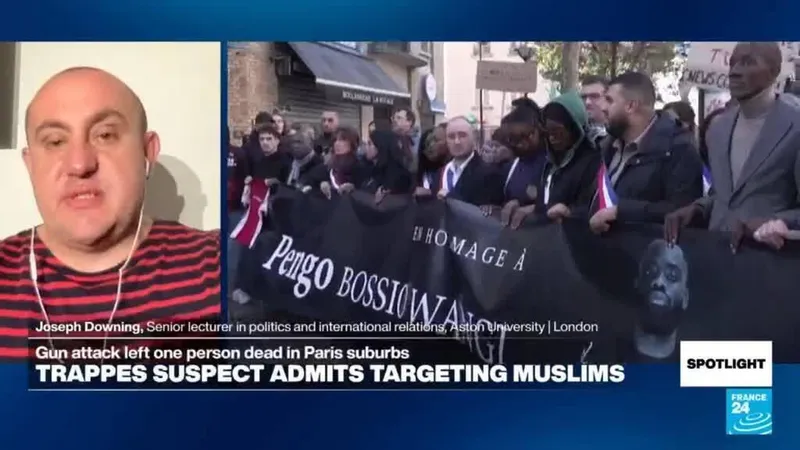
Extremist right-wing ideologies pose an increasing threat in France and across much of the democratic world, according to Dr Joseph Downing, a Senior Lecturer in International Relations and Politics at Aston University.
In modern France, politics of insecurity extends beyond crime and public order to encompass struggles over national identity, disappearance of the political center, and erosion of democratic values. The emergence of far-right extremist violence alongside persistent stigmatization of ethnically diverse working-class suburbs raises urgent questions about the relationship between political rhetoric, radicalization, and democratic moderation.
Deadly shooting illustrates broader shift
Downing examines these challenges against the backdrop of a deadly shooting in the Paris suburbs allegedly motivated by racist and anti-Muslim hostility. For Downing, the attack represents a significant development in Europe's extremist landscape.
This is really one of the first and one of the most serious right-wing nationalist, nativist-inspired terror attacks that you see in France.
Weakening democratic center
Downing challenges the political representation of France's working-class suburbs as centers of Islamist radicalization, describing such portrayals as divisive rhetoric that stigmatizes communities. His central concern is the weakening of the democratic center amid rising living costs and social insecurity.
Political movements on ideological fringes gain advantage by offering simplistic, divisive solutions to complex problems. The center of politics in France, as in many other democracies, is struggling to hold, Downing observes.
Conflation of identities
Downing identifies the conflation of racial identity, migration status, and religious extremism as particularly damaging to contemporary political discourse. By treating French citizens of African or Arab heritage as perpetual outsiders, commentators risk reinforcing divisions that undermine national cohesion.
The interview raises a fundamental question: what happens when narratives of national insecurity become more politically influential than the social realities they claim to describe? This challenge extends beyond France to democratic societies confronting polarization, economic anxiety, and exclusionary rhetoric.
Related
