State of Ad Fraud 2026: 52% of Schemes Use AI as Cloaking Loses Ground to iOS Exploits and Messenger Phishing - CyberSecurityNews
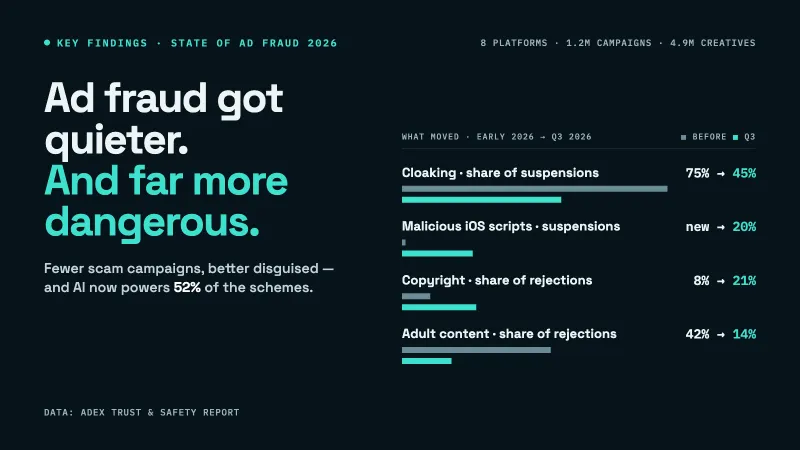
The ad fraud landscape transformed significantly in 2026, with 52% of schemes now using AI-generated or AI-assisted assets, according to the ADEX Trust & Safety Report.
The ad fraud landscape transformed significantly in 2026, with 52% of schemes now using AI-generated or AI-assisted assets, according to the ADEX Trust & Safety Report. The analysis of 1.2 million campaigns and 4.9 million creatives from January to September revealed a sharp shift toward AI-assisted fraud methods.
New Fraud Methods Emerge
While cloaking remains the top reason for suspending advertisers, it now shares the spotlight with malicious iOS scripts and messenger-based phishing on platforms like WhatsApp and Telegram. These newer threats allow fraudsters to conduct hundreds of believable conversations simultaneously using language models.
One well-made scam with a cloned brand page does more damage than a hundred crude ones.
Regional Risk Patterns
The report identifies high-risk regions across different quarters: Tier-1 markets (US, UK, Canada, Australia, Germany) remained high-risk throughout the year, while South Asia emerged as a concern from Q2 onward. Turkey was high-risk in the first half, Latin America in Q1, and East Asia in Q3.
2027 Fraud Predictions
Looking ahead, ADEX forecasts five emerging trends: ads written for AI agents using prompt injection, traffic that blurs bot and buyer lines, end-to-end AI-generated fraud operations, increased use of hacked domains and messenger funnels, and scareware moving to connected TV and AI assistant interfaces.
Related
