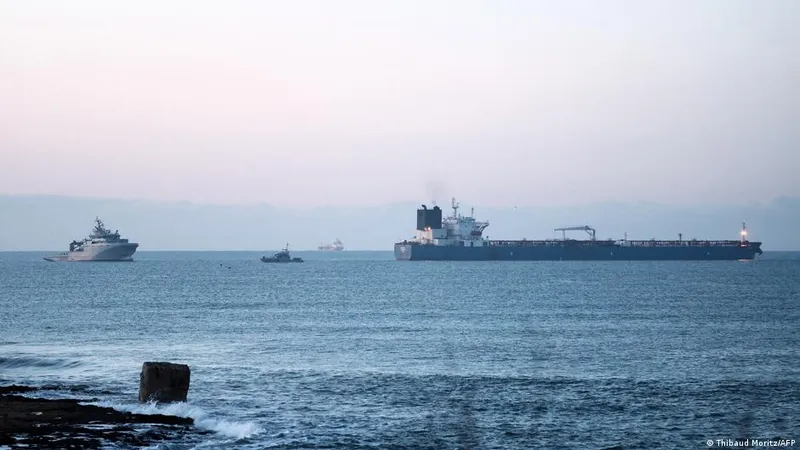
Shadow fleet sanctions: Can the EU act if the US pulls back?
The United States is reportedly considering lifting sanctions on some Russian shadow fleet vessels to ease global freight rates, potentially creating a rift with European allies who maintain a hard line against Moscow's sanctioned oil exports.
Russia's full-scale invasion of Ukraine has led Moscow to increasingly rely on a so-called shadow fleet to bypass Western sanctions and transport its oil globally. Similar deceptive practices have been attributed to other heavily sanctioned countries including Iran and Venezuela. These tankers often disable location transponders to evade detection and conceal cargo origins, using aging, uninsured vessels that raise safety concerns.
The shadow fleet has expanded rapidly, now accounting for nearly 19% of global oil tanker capacity according to estimates by financial intelligence firm S&P Global. Elisabeth Braw, senior fellow at the Atlantic Council, described the fleet as "a scourge" that undermines maritime order and increases environmental risks.
US policy shift
The Trump administration is reportedly considering lifting sanctions on some shadow fleet vessels to ease record-high global freight rates. However, Michael Carpenter of the International Institute for Strategic Studies warned such a move would "decrease the effectiveness of the sanctions regime overall" and "reward the aggressor."
This is the exact opposite of what the US should be doing if it wants to end the war.
US Energy Secretary Chris Wright rejected suggestions of removing sanctions, explaining the US is "converting dark tankers to legitimate tankers" that won't carry sanctioned oil. The reported policy shift follows a Trump-Putin deal allowing Russian diesel sales and comes ahead of US midterm elections.
European response
If the US steps back from sanctions enforcement, responsibility would shift to European policymakers. Ben Harris of the Brookings Institution noted Europe has less leverage without US financial system threats but maintains key tools through global shipping and insurance services.
Europe could demand tankers carry legitimate insurance when traveling through its waters, effectively blocking many shadow fleet vessels. Carpenter emphasized the EU's unique position to inspect vessels in the Baltic Sea and Danish Strait, though Moscow has threatened retaliation against European ships.
Without US backing, Carpenter warned it will be "harder for EU countries to take on the burdens and risks of sanctions enforcement." Braw stressed Ukraine's European allies must remain united but acknowledged their impact "is far less than what they can achieve if the US is part of the team."
Related
