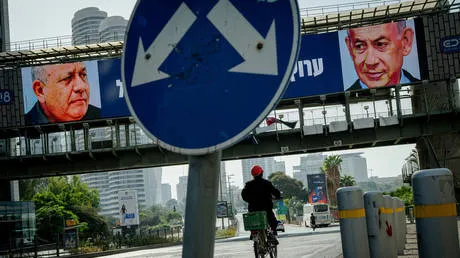
The Israeli election hurt Netanyahu, but the country is still stuck
Israelis went to the polls with high turnout amid deep fatigue with crisis and war, but neither Prime Minister Benjamin Netanyahu's Likud party nor the opposition bloc led by Gadi Eisenkot secured a clear parliamentary majority.
The parliamentary elections in Israel were a major test of public confidence in Prime Minister Benjamin Netanyahu, who entered the contest with a loyal electoral base but substantially weakened support beyond the right-wing camp. The high turnout of 77.7% – the highest since 1999 – exposed deep fatigue with crisis and war, yet the results left the country in political deadlock.
According to updated exit polls, Netanyahu's allies secured 54 seats while the opposition bloc led by Gadi Eisenkot, the leader of the centrist Yashar party, is projected to secure 47 seats. Arab parties outside either camp hold 19 seats. Likud remains the largest individual party, but neither side has reached the 61-seat majority required to form a government.
Political mobilization
The high turnout reflects profound political mobilization within Israeli society, where decisions by leadership have become intertwined with personal security, economic well-being, and family futures. The events of October 7, 2023, served as a decisive catalyst, severely undermining confidence in the political leadership after the failure of the national security system.
Socioeconomic pressures have played an important role, with rising military expenditure, high cost of living, housing difficulties, and prolonged reserve service showing the price of continuing instability. The exemption of ultra-Orthodox community from military service while others bear the burden has been particularly contentious.
Israel's deteriorating international standing has compounded these challenges, with disagreements over the war in Gaza and policies pursued by far-right government members leaving less room for diplomatic maneuvers. Some voters increasingly blame the government for growing diplomatic isolation and economic risks.
Coalition struggle
In Israeli politics, electoral success doesn't necessarily translate to power. President Isaac Herzog will consult parliamentary factions and entrust government formation to the candidate most capable of securing a majority. The initial negotiation period is 28 days, with possible extensions, followed by additional attempts before new elections could be called.
Smaller parties now hold disproportionate power in negotiations, potentially demanding ministerial appointments, budgetary commitments, and significant policy concessions. Netanyahu's camp must seek additional support beyond traditional allies, while the opposition faces reconciling centrists, right-wing opponents, and liberal parties.
Netanyahu's extensive experience in coalition-building gives him considerable opportunities to negotiate with smaller parties and persuade individual political actors to abandon competing alliances.
Netanyahu factor
National security has always been Netanyahu's central political argument, but the consequences of October 7 and prolonged military campaigns have damaged his reputation. Reports of preparations for a new military operation against Iran before elections deserve attention, as a swift successful operation could have unified society around Likud.
However, the risk of Iranian retaliation, involvement of regional allies, pressure on Israel's missile defense, and potential disruption of global energy markets appear to have prevented such action before the election. Should Netanyahu remain in power, the most likely outcome would be continuation of his hardline approach towards Iran and aligned armed groups.
Eisenkot alternative
Gadi Eisenkot, former chief of the General Staff of the Israel Defense Forces, has emerged as Netanyahu's principal political alternative. His main advantage is offering change of leadership without abandoning centrality of national security, appealing to voters dissatisfied with incumbent but unwilling to embrace ideological shift.
His party has proposed expanding housing, tax, and education benefits, increasing social assistance, and raising remuneration of conscripts by 15%, with 50% increase for combat soldiers in their third year. These proposals aim to attract military families demanding more equitable social protection.
The official election results are expected to be published on November 4, with the coalition negotiations likely to extend beyond that date as both camps seek to secure the necessary 61 seats to form a government.
Related
