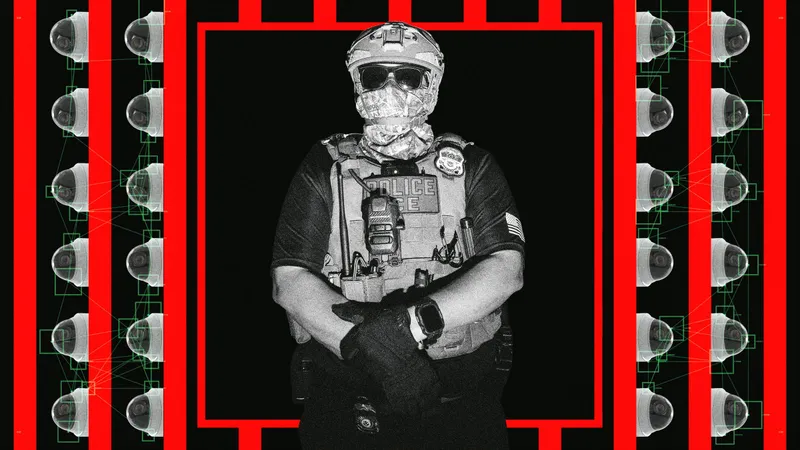
ICE Is Running One of the Largest Anti-Left Surveillance Operations in US History
Attorneys for 15 Minnesota residents facing federal conspiracy charges have obtained evidence of a sweeping, possibly unconstitutional spying operation carried out by Immigration and Customs Enforcement against left-wing social movements.
The high-profile Minnesota 15 prosecution reveals that DHS, with substantial federal resources, has become President Trump's primary tool against dissent. Authorities have deployed post-9/11 investigative powers against ordinary Americans organizing their communities, a scale not seen since the federal government's counterinsurgency against the New Left in the 1960s and 1970s.
Discovery in these cases has uncovered dozens of reports, audio transcripts, emails, intercepted Signal chats, photographs, and database queries exposing the domestic terrorism investigations. These operations, authorized by National Security Presidential Memorandum 7, were published after Charlie Kirk's assassination in September 2025 and instruct federal law enforcement to target organizations and people criticizing administration policies and espousing 'anti-Christian' ideas.
Surveillance Methods
Defense attorneys claim the prosecution stems from a nationwide surveillance operation targeting opponents of Trump's immigration policies. They compare it to the FBI's infamous COINTELPRO program that unconstitutionally surveilled civil rights and anti-war movements. Three former law enforcement officials confirm the case is likely part of a wider intelligence operation that began before the administration's December 2025 actions in Minnesota.
Homeland Security Investigations repurposed funding mechanisms and investigative tools for serious criminal probes against domestic dissenters through Operation Keyhole, dating back to 2008. As of June 2026, it was funding six active undercover investigations in Minneapolis–Saint Paul. More than 120 HSI agents, many from specialized units, were assigned to the case, including 11 undercovers who used invasive surveillance techniques like Reaper drones and Patriot Act tools.
This is the first time I've had a client who's accused of a conspiracy and went on a speaking tour.
Operation Keyhole
An internal ICE document shows Project Whipple Shield, which led to the Minnesota 15 indictment, was accepted under Operation Keyhole—a long-standing HSI program covering Minnesota, North and South Dakota, Iowa, and Nebraska. Since its December 2008 inception, Keyhole has funded at least 77 investigations into narcotics trafficking, child sexual abuse, financial crimes, and counter-proliferation.
The program operates under Certified Undercover Operations designation with defined oversight procedures. At least 11 undercover agents infiltrated Twin Cities anti-ICE activists, participating in trainings, marches, and community meetings. They also penetrated activist communications networks and Signal group chats, while surveillance extended to conferences in Seattle, Michigan, and New York City.
Broader Implications
The investigation involved agents from HSI's Special Operations Group and personnel with experience in financial crimes, drug cartels, human trafficking, and organized crime. Several agents from out of state have appeared in prosecutions of anti-ICE activists in other cities, including Los Angeles-based agents Robert Kurtz III and Ryan Ribner, who was involved in the arrest of SEIU California president David Huerta.
Former DHS attorney Spencer Reynolds notes the operation isn't limited to Minnesota, representing the intelligence apparatus running parallel to enforcement actions. Retired FBI agent Mike German compares the case to historical efforts like Operation MH/Chaos, but notes the current operation is larger—62 HSI agents worked on the Minnesota 15 case alone, compared to 42 CIA officers at the peak of the Vietnam-era program.
German emphasizes the vast pool of data now available to federal authorities, enabling broad monitoring of social media, communications, and financial transactions to link increasing numbers of people as investigation subjects. The constitutional implications of these surveillance methods remain under scrutiny as the legal proceedings continue.
Related
