Meta Is The Lead Customer For AMD’s 6th Gen EPYC CPUs, Deploys Millions of EPYC Chips & Will Leverage Next-Gen Instinct MI500 And Rack-Scale Solutions - Wccftech
AMD and Meta have deepened their strategic partnership, with Meta deploying millions of EPYC processors and becoming the lead customer for AMD's 6th Gen EPYC CPUs.
AMD and Meta have announced further deepening of their strategic partnership in which Meta will leverage AMD's Helios rack-scale solutions to power the latest AI models such as the Muse AI Agent, and offer day-0 support for Muse Spark Open and Muse Glimmer.
As part of today's announcements, AMD confirms that initial AMD Helios rack-scale systems are being deployed at Meta facilities worldwide.
Meta is a strategic partner for AMD, and we have built this partnership through years of deep technical collaboration – from EPYC processors powering Meta's infrastructure to Instinct GPUs and open software supporting its AI workloads.
Processor Deployment
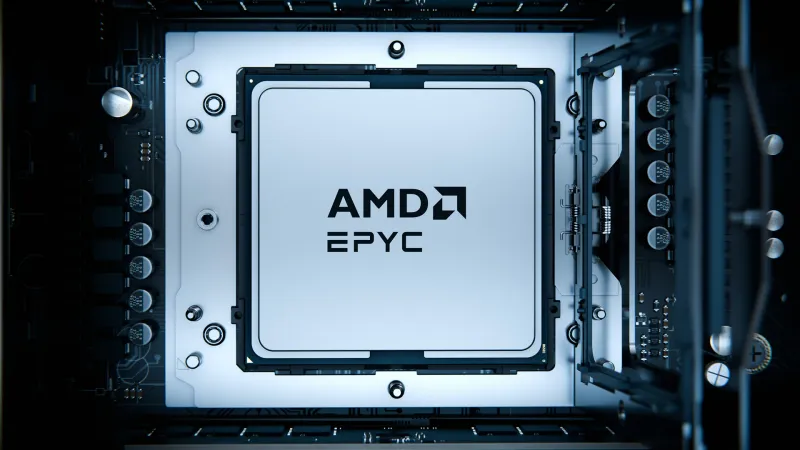
Meta has deployed millions of EPYC processors across multiple generations and is confirmed as the lead customer for 6th Gen EPYC "Venice" CPUs based on the Zen 6 core architecture. The company is also collaborating with AMD on its future Verano processors designed specifically for Agentic AI workloads.
EPYC processors form the foundation of Meta's Muse Personal AI agent, demonstrating the critical role AMD's silicon plays in Meta's AI infrastructure strategy.
GPU Optimization
Meta is utilizing AMD's Instinct GPUs for training, ranking, and recommendation engines. The company serves as an early definition customer for the Instinct MI450 series and will deploy custom Instinct GPUs optimized for its specific workloads.
The partnership extends to future AMD platforms including the Instinct MI500 and next-gen rack-scale systems. Meta's technical paper details methods for optimizing AMD Instinct MI350X GPUs versus NVIDIA B200 for recommendation model training, achieving up to 1.5x improvement in end-to-end training throughput through hardware-model co-design and performance optimization techniques.
Software Collaboration
AMD and Meta have worked together to advance ROCm through PyTorch, enabling developers to leverage AMD GPUs immediately. This collaboration has allowed AMD to offer Day-0 support for the Muse Spark Open model on Instinct GPUs, while Muse Glimmer runs on AMD Ryzen AI PCs and Radeon GPUs.
The companies have expanded their software collaboration to large-scale AI training, optimizing recommendation models on Instinct MI350X GPUs and contributing improvements to PyTorch, Triton, and ROCm open-source ecosystems.
By combining EPYC CPUs, Helios rack-scale systems, and Instinct GPUs with deep software co-optimization, both companies are enabling Meta's most ambitious models while reducing reliance on any single vendor in the rapidly evolving AI landscape.
Related
