Why Ukraine may be involved in Mali's conflict
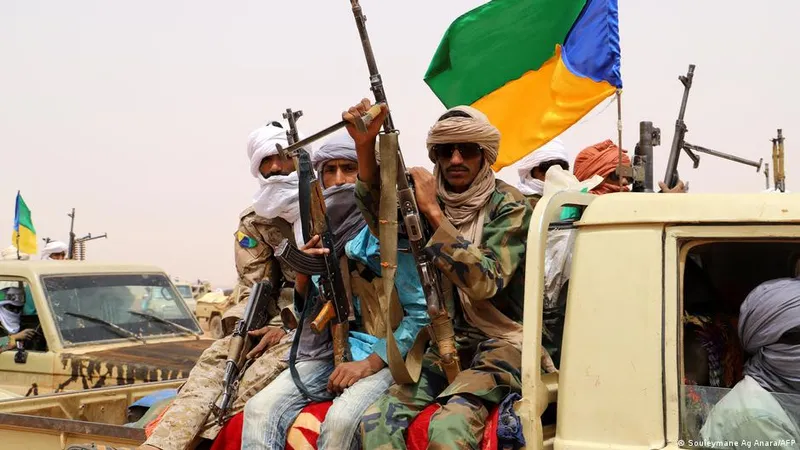
Ukraine may be supporting Tuareg rebels in northern Mali with drone specialists, according to a CNN investigation, as part of efforts to weaken Russian influence in Africa.
According to a CNN investigation published in September, approximately 15 Ukrainian drone specialists are reportedly supporting Tuareg rebels in northern Mali. Their common enemy is the military government in Bamako and its Russian allies, raising questions about Ukraine's expanding military operations beyond its borders.
The allegations have resurfaced suspicions dating back to July 2024, when DW reported on possible involvement by Ukraine's military intelligence service (HUR) in an ambush on Russian Wagner fighters near Tinzaouaten. At the time, HUR denied direct involvement, though they acknowledged providing information to the rebels.
Strategic motives
Marta Oliynyk-D'omochko, coordinator of the African Studies Program at the National University of Kyiv-Mohyla Academy, sees a strategic motive behind Ukraine's alleged involvement. "Ukraine's main interest is to weaken Russia's influence around the world," she told DW, noting that reducing Russia's military influence would also diminish the economic opportunities arising from it.
Russian historian Irina Filatova considers Ukrainian support for the Tuareg movement plausible, though she has no independent evidence to confirm such involvement. "The Ukrainians regard Russian troops anywhere in the world as legitimate targets," she argued, suggesting that setbacks in Mali could tie up Russian resources and undermine Moscow's reputation as a security partner.
Controversial partnerships
The Tuareg separatist Azawad Liberation Front (FLA) cooperates with the Jama'at Nusrat al-Islam wal Muslimeen (JNIM), a jihadist group affiliated with al-Qaeda. This alliance presents a significant political risk for Ukraine, as any support for the FLA could indirectly benefit JNIM through joint operations or shared knowledge and equipment.
Oliynyk-D'omochko describes the relationship as a tactical arrangement rather than a comprehensive alliance. "It is more of a situational alliance against a common enemy than a comprehensive partnership," she explained, noting that the FLA is focused on northern Mali and pursuing self-determination or extensive autonomy rather than seeking to replace the government in Bamako.
Diplomatic consequences
Mali, Niger and Burkina Faso, all ruled by military governments, have accused Ukraine of supporting armed groups and threatening their territorial integrity. The three Sahel nations have severed diplomatic relations with Kyiv and deepened their cooperation with Russia.
In September, Mali's Foreign Minister Abdoulaye Diop accused Ukraine at the United Nations of "providing clear and open support to terrorist groups and other mafia-like groups to undermine our country's territorial integrity," though he provided no evidence for the claim. These accusations may serve to legitimize the Sahel nations' partnership with Moscow while portraying Ukraine as a destabilizing actor.
For Ukraine, engagement in Mali could offer a relatively low-cost way to weaken Russian interests beyond Europe, but carries significant political risks. Cooperation with separatists could undermine Kyiv's message of equal partnerships with African countries and affect how potential partners view Ukraine's international involvement.
Related
