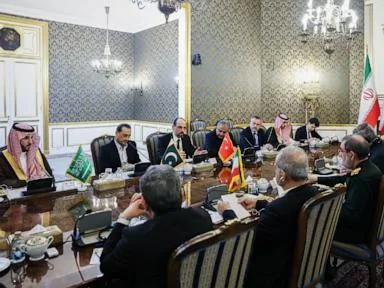
Delegations meet in Iran with Mideast region on edge over potential for renewed fighting
High-level delegations from Saudi Arabia, Pakistan and Turkey met with Iranian officials in Tehran on Monday to try to prevent renewed fighting in the Iran war as tensions escalate ahead of elections in Israel and the United States.
The delegations, including Saudi Defense Minister Khalid bin Salman, Pakistani army chief Field Marshal Asim Munir and Turkey's intelligence head Ibrahim Kalin, met with Iran's top security officials to push for a deal between Tehran and Washington. The talks occurred as many in Iran express anxiety about a possible return to all-out war, with Israeli and American leaders sharpening their threats before elections in both countries.
Regional Security Concerns
The war in Yemen and strikes by Iran-backed Houthi rebels against Saudi Arabia were key topics during the discussions, according to two regional officials who spoke on condition of anonymity. Iranian Foreign Ministry spokesperson Esmail Baghaei told reporters that while the meeting's agenda wasn't set, the talks would undoubtedly address the most pressing threats to regional security. President Masoud Pezeshkian expressed Iran's support for agreements that would deepen regional cooperation and resolve differences.
Iran supports any agreement that would deepen regional cooperation, resolve differences and make greater use of the shared resources and capabilities of Islamic countries.
Diplomatic Efforts
Saudi Arabia stated that the delegations hoped to find ways to de-escalate tensions, enhance regional security and promote its stability. Qatari mediators also traveled to Tehran on Sunday, working in coordination with the United States as part of de-escalation efforts. Pakistan and Qatar had previously brokered a June agreement aimed at reopening the Strait of Hormuz to shipping, but the deal unraveled quickly as both sides renewed attacks.
With worries about renewed fighting before Israel's election on Tuesday and the U.S. midterm election on Nov. 3, Baghaei said Iran hadn't closed the window of diplomacy and that messages were being passed to the United States through intermediaries. However, he criticized the U.S. for persisting in unilateral demands and using the phrase complete surrender, which he said no Iranian accepts.
Israeli Warnings
Israeli Prime Minister Benjamin Netanyahu repeated his warning on Sunday that Iran or its proxies could launch an attack before the close election to disrupt the vote, citing intelligence. The (military) is ready both to defend and to strike, he said in a video statement. You will suffer disproportionate blows far greater than you can imagine. Channel 12 reported that Netanyahu and his military chief of staff clashed over an instruction to carry out an action that the army believed could quickly trigger conflict with Iran.
Netanyahu's office later described the report as fake news. Defense Minister Israel Katz stated that there has been no intention by Israel of initiating an attack on Iran before the elections in Israel and that should Iran attack Israel, we would respond with great force. Baghaei responded by saying that the Israeli regime is highly skilled at carrying out false-flag operations and that Iran will not hesitate to exercise its inherent right to self-defense.
Yemen Conflict Escalates
Yemen has become a widening front in the Iran war that began in February, with the Houthis increasingly attacking Saudi Arabia for supporting Yemen's internationally recognized government. The conflict intensified after July airstrikes on Houthi-held Sanaa International Airport shattered a 2022 ceasefire deal. Early Monday, Houthi spokesperson Yahya Saree claimed the group had fired ballistic missiles at Saudi-backed government forces in Aden and Lahj provinces, destroying military equipment and causing casualties.
Residents in Houthi-held areas reported explosions, with Houthi media claiming airstrikes targeted a solar power system and water well in Sanaa. In the port city of Mokha, recently seized by the Houthis, rockets hit several buildings including a hospital. The Saudi-led coalition reported destroying five tunnels used for storing ballistic missiles and four missile launchers in an operation in Houthi-controlled territory. Meanwhile, Egypt's parliament approved President Abdel-Fattah el-Sissi's request to provide military support to Saudi Arabia against Houthi attacks.
Related
