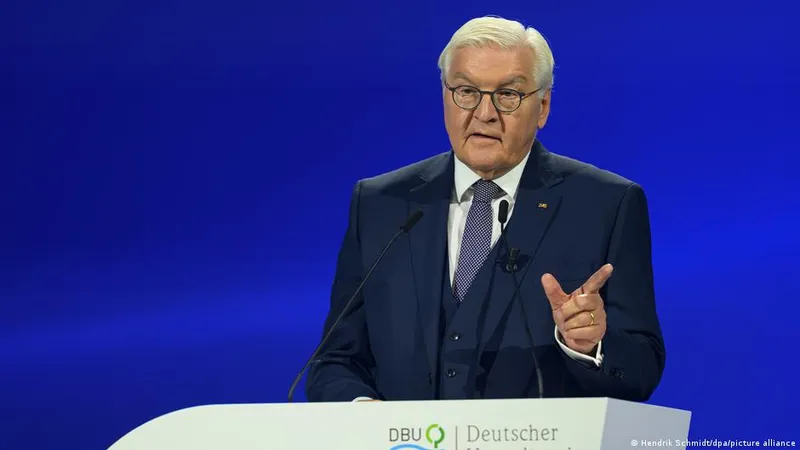
Steinmeier in China: A major state visit in uncertain times
German President Frank-Walter Steinmeier has arrived in China for a five-day state visit, his first in eight years, as Europe recalibrates its complex relationship with Beijing.
Steinmeier's visit comes at a significant moment, as the Chinese Communist Party's Central Committee convenes for its plenary session, an event foreign dignitaries typically avoid. The president's itinerary includes cultural exchange sites and a visit to a Volkswagen plant in Hefei, reflecting Germany's economic ties with China.
Balancing Act
The visit highlights Germany's diplomatic balancing act with China. While China remains a crucial market for German automotive, machinery, and chemical industries, state-supported overcapacity in China pressures European manufacturers. Germany and Europe are increasingly dependent on China for raw materials and technologies, prompting them to seek alternative partnerships.
That was a concrete step, but it can only be the beginning.
Dual Strategy
Coinciding with Steinmeier's visit, Chancellor Merz is traveling to Japan, Singapore, and South Korea with business representatives. His focus includes competitiveness, technological changes, defense cooperation, and critical raw materials. The simultaneous trips send a coordinated message to China.
While Merz strengthens Germany's Indo-Pacific partnerships, Steinmeier seeks dialogue with Beijing. This approach allows Germany to maintain partnership while reducing risks, though it represents a difficult balancing act that also enables China to save face.
This joint trip sends a very well-coordinated message to the Chinese that we remain committed to the partnership but at the same time are taking steps to reduce risk.
Human Rights Concern
Steinmeier's delegation includes representatives from German culture, politics, and academia, despite Beijing having imposed sanctions on the China Institute MERICS, whose director Mikko Huotari is part of the delegation. His presence sends a clear message to China that Germany does not approve of the sanctions.
Related
