Second MSI RTX 5090 Seemed Fine On Arrival Until Safeguard+ Helped User Identify Uneven Load On Pins Before The Connector Melted - Wccftech
A user's second MSI RTX 5090 seemed fine until the company's Safeguard+ power supply feature revealed a manufacturing defect that could have caused the connector to melt.
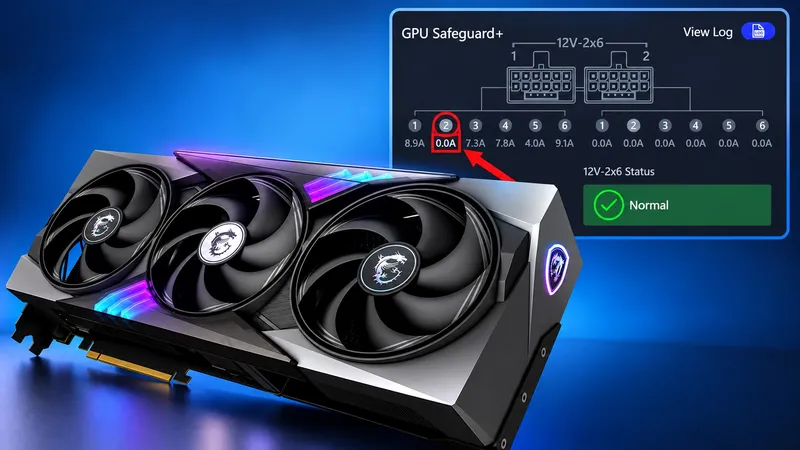
A user's replacement MSI RTX 5090 appeared to be functioning normally until the company's Safeguard+ power supply feature revealed a dangerous manufacturing defect. The technology identified that one pin in the 12V-2x6 connector wasn't carrying any current, preventing what could have been a catastrophic connector meltdown during heavy use.
Manufacturing Defect Detected
The Redditor u/junon received a different RTX 5090 model through RMA after experiencing errors with his original card. The replacement showed no apparent issues, but to be cautious, he installed MSI's new AI1300TS power supply with the exclusive Safeguard+ feature. This technology actively protects 12V-2x6-equipped graphics cards by monitoring power currents on each pin and sending real-time alerts through the MSI app.
As soon as he started monitoring the current, he saw one of his pins carrying no current at all.
The user initially suspected the issue was related to cables or connections, but changing cables and ports didn't resolve the problem. He eventually noticed that the connector appeared slightly lifted from the GPU's PCB when connected, confirming a manufacturing defect.
Potential Disaster Averted
The defective card could have caused serious damage if operated for extended periods under full load, as the remaining five pins would have had to handle the entire electrical burden. This uneven distribution has been responsible for melting numerous 12V-2x6 connectors, particularly on power-hungry RTX 5090 GPUs.
The user is now seeking another RMA for the card, which he initially believed was completely safe. MSI's Safeguard+ technology proved crucial in identifying the invisible defect before it led to hardware failure, highlighting the importance of such monitoring features for high-end components.
Related

