Nvidia’s open-source Flora labels an hour of robot video for 72 cents, against about $88.50 on GPT-6 Astra - eGamers.io
Nvidia's new open-source data engine, Flora, can annotate an hour of robot video for just 72 cents, compared to approximately $88.50 for OpenAI's GPT-6 Astra, according to the company.
Nvidia's new open-source data engine, Flora, can annotate an hour of robot video for just 72 cents, compared to approximately $88.50 for OpenAI's GPT-6 Astra, according to the company. Running the same job through OpenAI's GPT-6 Astra costs roughly $88.50, making Flora about 125 times cheaper. The benchmarks behind this claim, however, are less straightforward than they initially appear.
Flora is open source, with models available on Hugging Face. Nvidia reported that the engine is already part of training for its GR00T models, where it labels as much as 200,000 hours of video daily on 512 GB300 GPUs. The 72-cent price is an estimate based on an assumed rental rate of $10 per GPU per hour, which could vary with different cloud billing.
Three Types of Robot Labels
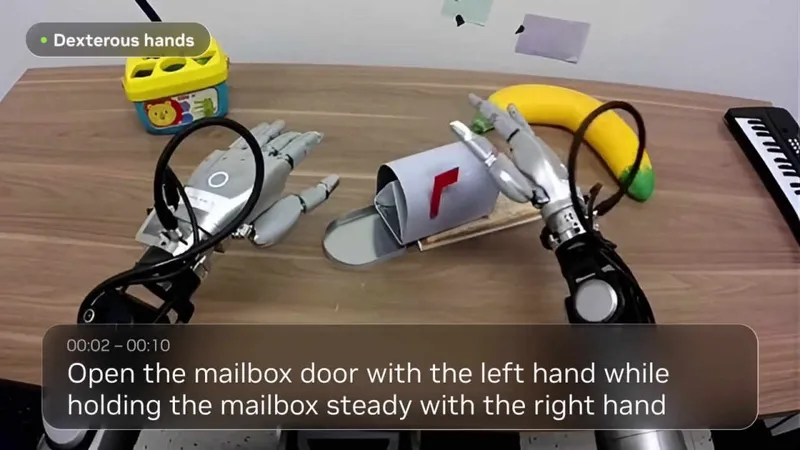
Big robot AI models learn from video footage that requires text annotations. Nvidia's GEAR research lab categorizes these into three types: temporal action labels that record when actions occur, step-by-step progress scores that enable learning through trial and error, and success/failure determinations for monitoring deployed robots. Most current tools cover only one of these three types, while large language models like GPT-6 Astra can handle several but are prohibitively expensive at robotics team volumes.
Flora handles all three types of labels through three fine-tuned Qwen3.5 models. A 9B model splits videos into action segments, while a 27B model describes each segment using context from surrounding footage. The third component, Flora-Rewarder, can rate episodes on a 1-to-5 scale, label steps as normal, suboptimal or failure, and score episodes against user-defined rubrics.
Performance Trade-offs
Flora excels at spotting failures, with Flora-Rewarder catching 53.3 percent of failed steps within an episode—far surpassing competitors, with no rival topping 11.7 percent and Astra catching none at all. The trade-off is false alarms, as Flora marks about 11 percent of normal steps as errors. Flora's error rate on RoboRewardBench is 27.8 percent lower than Astra's, particularly for partially completed tasks.
If a robot tips a bottle over but doesn't knock it off the table, Flora awards 3 out of 5 points, the same as the human reference. Astra awards one.
Astra maintains leads in rubric-based scoring and trajectory ranking. Results on public benchmarks are mixed: Flora is best at identifying where actions start and stop, but Astra beats it on overall score, and Google's Gemini 3.8 Flash surpasses it on description accuracy alone. Nvidia acknowledges that its own benchmark, DenseCaptionBench, has a methodological flaw—GPT-6 Astra grades the descriptions while also being tested.
Strategic Hardware Play
Flora represents Nvidia's broader strategy to keep developers using its hardware through open AI models. The company has invested billions in open-source AI to maintain its market position and has been addressing robotics training data gaps through simulation and automated processing. Flora feeds into Nvidia's pipeline that prepares, multiplies and scores training material automatically.
Google is pursuing a similar approach with its recently announced Gemini 4 Argon, which also identifies work steps in training videos and flags failed actions. Flora extends Nvidia's effort to cover the entire robotics value chain—from hardware and training data through simulation to models—while remaining free software that ultimately sells more GPUs.
Related
