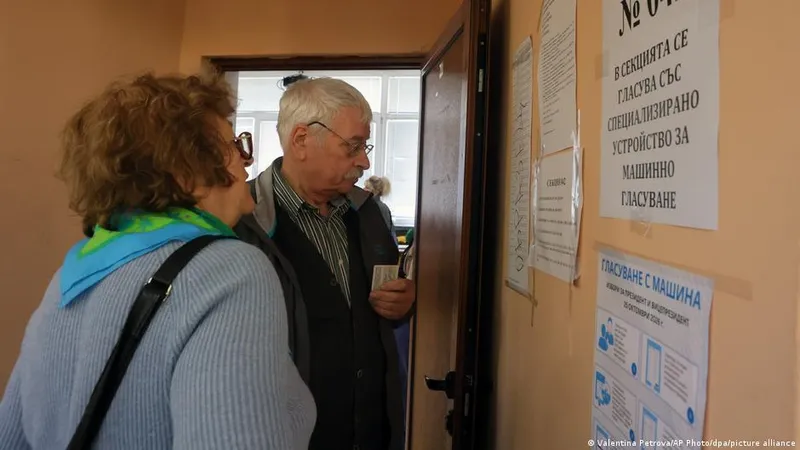
In Bulgaria, record low voter turnout triggers a November 1 presidential run-off in a poll colored by divisions over Ukraine war
Record low voter turnout in Bulgaria's presidential election has triggered a run-off for November 1, with candidates divided over Ukraine war policy.
Voter turnout in Sunday's Bulgarian presidential election fell below 40%, far short of the 50% threshold required for a first-round victory. The low participation means Bulgarians will head back to the polls on November 1 to choose between candidates with starkly different views on Ukraine and relations with Moscow.
The election occurred amid heightened tensions following drone attacks on merchant ships in the Black Sea off Bulgaria's coast, underscoring the conflict's significance for this former Soviet satellite state. Satellite internet antennas from the Starlink network, crucial for Ukraine's defense, were also set on fire near Sofia.
Key candidates and their positions
Incumbent President Iliana Yotova, 62, leads with polling at 41-47%. She favors dialogue with Moscow to achieve peace in Ukraine and opposes military aid to Kyiv. A victory would give a boost to Prime Minister Rumen Radev, who shares her views on Russia, and make Yotova Bulgaria's first elected female president.
Her main challenger is Andrey Gyurov, 50, polling at 28-31%. The former caretaker prime minister is backed by pro-Western opposition and strongly supports Bulgaria's Euro-Atlantic ties as an EU and NATO member. He signed a security cooperation agreement with Kyiv during his previous term.
Kostadin Kostadinov, leader of the pro-Russian far-right Vazrazhdane party, trails in third place with 10-13% support. Nearly half of the 27 candidate pairs in the first round openly expressed pro-Kremlin positions.
Economic and security concerns
Beyond foreign policy, voters are grappling with rising energy prices and inflation that have caused economic hardship in Bulgaria, the EU's poorest member state. Government corruption remains a persistent concern, with many hoping for stability after multiple elections and coalition breakdowns in recent years.
The maritime attacks near Bulgaria's coast have prompted the government to seek assistance from allies to strengthen security. While Prime Minister Radev noted the attacks seemed advantageous to Russia, his administration has declined to directly blame Moscow, raising concerns about potential escalation.
Although Bulgaria's presidency is largely ceremonial, the head of state can appoint interim governments during political crises, serves as commander-in-chief of the armed forces, and holds veto power over legislation.
Related
