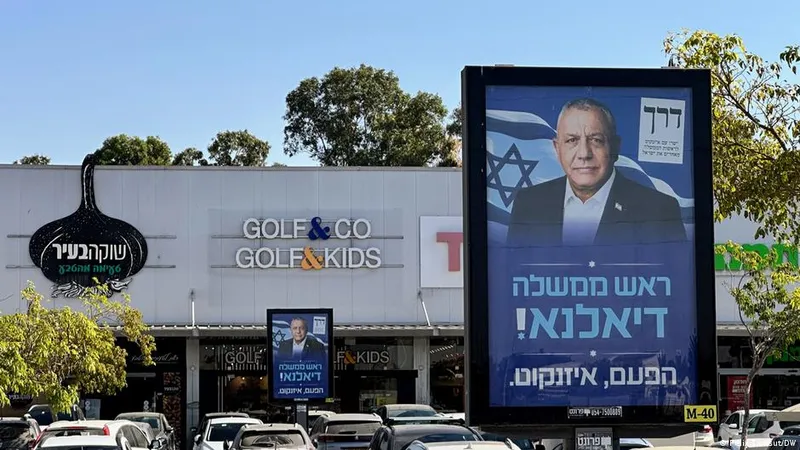
Gadi Eisenkot campaigns on Moroccan roots in challenge to Netanyahu
Ahead of Tuesday's elections, liberal Yashar party leader Gadi Eisenkot is emphasizing his Moroccan heritage in campaign posters featuring the slogan 'Rosh Memshala Dialna' ('Prime Minister of our own'), directly challenging Prime Minister Benjamin Netanyahu's hold on Mizrahi voters.
In Sderot, a city with a large Moroccan Jewish community and traditionally a right-wing stronghold, Eisenkot's campaign posters are prominently displayed. The slogan 'Rosh Memshala Dialna' combines Hebrew for 'prime minister' with Moroccan Arabic for 'of our own.' This strategic focus on his Moroccan roots comes as Eisenkot attempts to challenge Netanyahu's support among Mizrahi voters, who constitute approximately half of Israel's Jewish population.
Sderot, located near the Gaza border, has become symbolic of Moroccan-Jewish culture in Israel. In the 2022 elections, Likud received over 40% of votes there compared to 23% nationwide. Eisenkot's Yashar party has accused Likud of sidelining its Mizrahi politicians, with one campaign slogan mocking 'Netanyahu: Let the Mizrahim give interviews.'
Historical divisions
The campaign highlights Israel's long-standing divisions between Ashkenazi Jews of European origin and Mizrahim from Middle Eastern and North African backgrounds. Mizrahim have faced discrimination since Israel's founding, when the largely Ashkenazi leadership of Mapai pursued policies that pressured Mizrahim to 'Europeanize' rather than preserve their culture or Arabic language.
Identity politics
The campaign took a controversial turn when right-wing journalist Yinon Magal, a Netanyahu supporter, claimed Eisenkot was being controlled by elitist Ashkenazim and called him a 'monkey.' Netanyahu condemned the remark. Eisenkot's embrace of his identity, according to Ben-Simon, serves as a way of 'leaving the frame' set by Israeli society.
Ben-Simon explained that by using Moroccan Arabic terms, Eisenkot is creating 'a new identity: an Israeli-Moroccan identity.' He noted that 'Eisenkot is the first to allow this double identity to be expressed and still feel at home,' potentially reshaping Israeli political discourse around ethnic origins.
Related
