Electrum Wallet Attack Hid Bitcoin Theft Behind a Fee Increase - Cryptonews.net
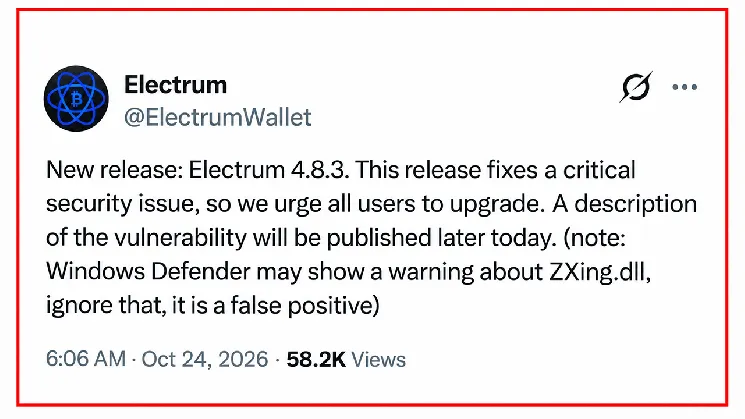
Electrum released version 4.8.3 on Saturday to patch a critical vulnerability that allowed malicious servers to steal Bitcoin by manipulating transaction fees.
The vulnerability, documented in GitHub advisory GHSA-6jp4-8v48-cc5v, exploited how the lightweight Bitcoin wallet handles unconfirmed transactions. Electrum relies on external servers for transaction histories and fee estimates, but older versions accepted certain unconfirmed transactions without verifying their signatures.
A compromised server could intercept a legitimate payment, prevent its broadcast, and substitute a fraudulent transaction directing funds to an attacker-controlled address. The replacement carried invalid signatures, yet Electrum displayed it as an ordinary pending payment.
The attack became dangerous when users attempted to increase transaction fees through Replace-By-Fee (RBF). Rather than increasing the fee on their original payment, victims could inadvertently sign the substituted transaction, authorizing the transfer of their own Bitcoin to the attacker.
Attackers generated receiving addresses whose final four characters matched the intended destination, making a quick address comparison less likely to expose the switch. One fraudulent transaction even carried a zero fee, apparently encouraging its victim to initiate the very fee adjustment needed to complete the theft.
Developers received two private reports. On Oct. 11, user dannydeezy reported transaction substitution, although the fee-bump mechanism wasn’t fully understood. On Oct. 18, Raju-K12 reported losing funds after approving a fee increase, establishing that the attack wasn’t merely theoretical.
The patch, introduced through commit 90fe308, requires Electrum to verify signatures for unconfirmed transactions spending coins belonging to the wallet. Fraudulent transactions with invalid signatures are rejected before entering the wallet’s local history.
Users running versions earlier than 4.8.3 should download the update exclusively from electrum.org and verify its cryptographic signatures. Until upgrading, users should carefully inspect every destination address and payment amount before signing, including during fee adjustments.
Those connecting exclusively to trusted, self-hosted Electrum servers aren’t exposed to this particular server-based attack. The incident exposes a curious contradiction: A wallet designed to protect private keys could still be manipulated into requesting a perfectly valid signature for a payment its owner never intended to make.
Related

