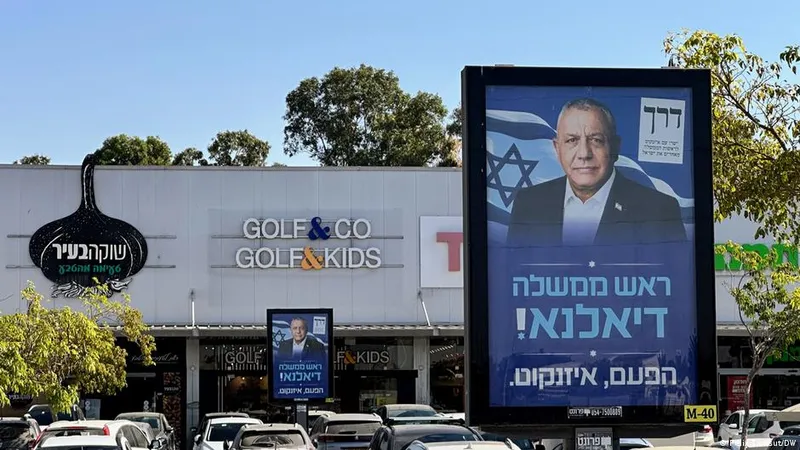
Gadi Eisenkot campaigns on Moroccan roots in challenge to Netanyahu
Ahead of Tuesday's elections, Gadi Eisenkot's Yashar party is campaigning on his Moroccan heritage in Sderot, a city with large Moroccan-Jewish population and traditionally a Netanyahu stronghold.
Campaign posters in Sderot, a city with large Moroccan-Jewish community, prominently feature Eisenkot's Yashar party with the slogan "Rosh Memshala Dialna," combining Hebrew for "prime minister" and Moroccan Arabic for "of our own." This strategic focus on Eisenkot's Moroccan roots targets a city that has been a stronghold for Netanyahu's Likud, which received over 40% of votes in Sderot in 2022 compared to 23% nationwide.
Historical divisions
Sderot, located near the Gaza border, has become symbolic of Moroccan-Jewish culture in Israel. The city represents deeper historical divisions between Ashkenazi Jews of European origin and Mizrahim Jews from Middle Eastern and North African backgrounds, who make up about half of Israel's Jewish population.
Mizrahim have faced discrimination since Israel's founding, with the ruling socialist party Mapai pursuing policies that encouraged "Europeanization" rather than preserving their culture. Many were sent to underfunded development towns like Sderot, leading to persistent economic and social inequalities.
Political strategy
Eisenkot, who grew up in Eilat with a large North African Jewish population, has accused Likud of sidelining its Mizrahi politicians. His campaign mocks this with the slogan "Netanyahu: Let the Mizrahim give interviews." The right-wing journalist Yinon Magal previously called Eisenkot a "monkey," prompting Netanyahu to condemn the remark.
Eisenkot's embrace of his identity represents a departure from traditional political approaches. By using Moroccan Arabic terms, he's creating space for an "Israeli-Moroccan identity," according to Ben-Simon, who noted this allows for "double identity" while still feeling at home in Israeli society.
Sderot's changing landscape
The city's demographics have shifted significantly, particularly after the October 7, 2023 Hamas attacks, which killed over 50 people in Sderot. The population has grown by 5,000 to 40,000, with many young families moving there due to idealism and government benefits.
The national-religious community, which tends to vote for Bezalel Smotrich's far-right Religious Zionism party, is becoming increasingly dominant in Sderot. While these votes support Netanyahu's coalition, the prime minister's Likud party itself could face losses in the city.
Regardless of the election outcome, Eisenkot's campaign could strengthen the connection between cities like Sderot and their Moroccan roots. A victory for Eisenkot might reshape Moroccan Jews' future identity in Israel, potentially altering long-standing political allegiances in communities that have traditionally supported Netanyahu.
Related
