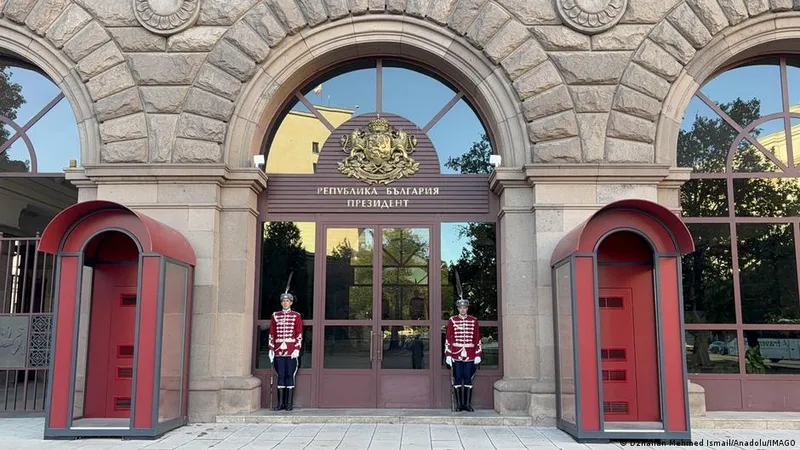
Bulgaria holds presidential elections amid divisions over Ukraine war
Bulgarians are going to the polls in a presidential election on Sunday, choosing between candidates with differing approaches to the war in Ukraine and relations with Moscow.
The election comes amid drone attacks on ships in the Black Sea off Bulgaria's coast, which have brought home the significance of the conflict in Ukraine for this former Soviet satellite state. Polling stations are open from 7 a.m. to 8 p.m. (0500-1800 GMT), with exit polls expected when they close and official results up to 48 hours later.
Ceremonial powers, significant influence
Although the Bulgarian presidency is largely ceremonial, the head of state can appoint interim governments during political crises, serves as commander-in-chief of the armed forces, and holds the power to veto legislation. These powers make the election particularly important amid current political divisions.
Candidates divided on Ukraine
Incumbent President Iliana Iotova, 62, leads in polls with 41-47% support. She favors dialogue with Moscow to bring peace to Ukraine and opposes military aid to Kyiv. Her main challenger is Andrey Gyurov, 50, polling at 28-31%, who is backed by pro-Western opposition and strongly supports Bulgaria's Euro-Atlantic ties.
Key issues and next steps
The war in Ukraine is a central theme, following drone attacks on merchant ships near Bulgaria and the burning of Starlink satellite internet antennas near Sofia. Rising energy prices, inflation affecting Bulgaria—the EU's poorest member state—and government corruption are also major concerns.
With 27 pairs of candidates competing and nearly half openly pro-Kremlin, if no candidate wins an absolute majority in the first round, a run-off is scheduled for November 1 between Iotova and Gyurov, who are widely considered the certain contenders for any second round.
Related
