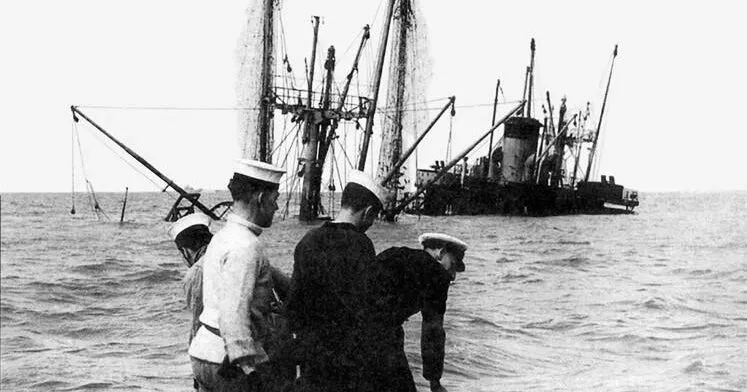
Delicate operation carried out on explosives-packed WWII shipwreck
Engineers have completed a delicate operation to remove the three masts from the SS Richard Montgomery, a World War II shipwreck containing 1,500 tons of explosives that rests just 40 miles from London.
The SS Richard Montgomery, a U.S. Liberty ship grounded on a sandbar in the Thames Estuary since August 1944, has long been a silent hazard. Recent surveys revealed increasing deterioration in its structure, prompting fears that the three rusting masts protruding from the water could collapse and potentially detonate the estimated 1,500 tons of explosives in its cargo holds.
The vessel was carrying munitions intended to support Allied forces following the D-Day landings when it broke apart during salvage efforts and sank. Its proximity to London, just 40 miles away, has made it a persistent concern for authorities.
Immediate Danger Addressed
The complex engineering project, requiring specialized program management and risk assessment expertise, was completed ahead of schedule and on budget. U.K. maritime minister Keir Mather announced that all three masts had been successfully removed at a cost of just under $13 million.
Persistent Risks Remain
While the most immediate danger has been addressed, the explosives remain in the rusting wreck on the riverbed. Officials maintain an exclusion zone around the site, approximately 1.5 miles off the Sheerness coast, and will continue monitoring it closely.
The potential consequences of an explosion remain debated among experts. Estimates range from impacting the shoreline to creating a tidal wave that could travel up the Thames, though officials continue to assess the overall risk as low.
Specialized Removal Process
Engineers faced the challenge of removing the masts without disturbing the sunken ship's hull or the perilous cargo. They designed a custom lifting frame and used a remotely operated underwater diamond-wire saw that clamps around the mast with hydraulic arms, eliminating the need for divers in the water.
The masts, which had been visible above the estuary since World War II, have been preserved and moved to the Historic Dockyard Chatham museum. They will be displayed in recognition of the ship's historic significance and its role in supporting Allied forces during the war.
Related
