Deaths of 2 CIA agents in Mexico lead to treason charges
A former Mexican state attorney general could face trial for treason over allegations he conducted a joint operation with the CIA without federal approval, which resulted in the deaths of two CIA agents and two Mexican officials.
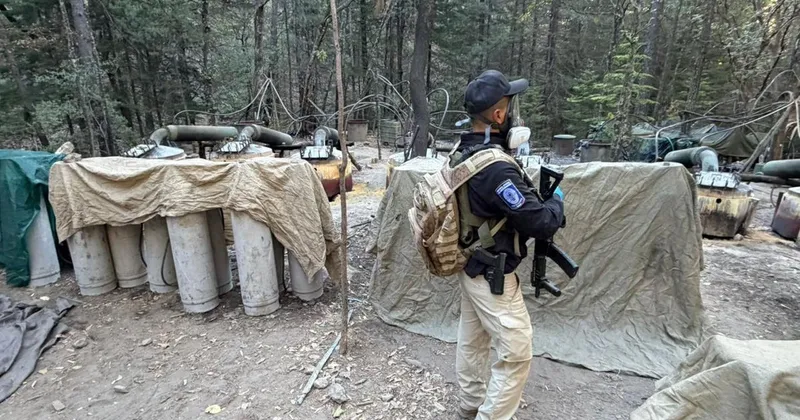
The operation to dismantle a drug lab in the state of Chihuahua in northern Mexico drew international attention after two CIA agents and two state officials died in a car accident on April 19. The incident has sparked outrage among Mexican officials, particularly President Claudia Sheinbaum, who has made defending national sovereignty a cornerstone of her administration.
State district attorney César Jáuregui resigned following the accident, stating he wanted to clear the way for an inquiry. He was arrested on October 17 on state charges of illegal exercise of public office, which a judge ruled could proceed to trial. Federal officials later added the treason charge, with a federal judge set to decide on Saturday whether to allow the indictment.
Fatal Operation Details
On the day of the operation, Mexican officials reported dismantling methamphetamine labs in the mountains between Morelos and Guachochi. The operation was conducted by the state prosecutor's office and the army, though no arrests were made as the criminals fled. On the return journey, a vehicle in the convoy veered off the road and fell into a ravine, killing two state agents and two Americans.
The Mexican casualties were identified as first commander Pedro Román Oseguera Cervantes and officer Manuel Genaro Méndez Montes. Jáuregui initially described the Americans as "instructor officers" carrying out training tasks as part of binational anti-drug cooperation. However, multiple sources later confirmed to CBS News they were CIA agents, though the CIA declined to comment.
None had formal accreditation to participate in operational activities in national territory.
Treason Charge Implications
Federal prosecutors argue that Jáuregui endangered national security by authorizing the participation of U.S. agents in the field operation—a decision that only the federal government can make. The treason charge carries a potential sentence of 5 to 40 years in prison, though experts note it is extremely difficult to prove in peacetime.
According to Jáuregui's defense team, federal prosecutors are seeking an exemplary punishment to prevent a situation similar to the United States' removal of Venezuelan President Nicolás Maduro. However, the U.S. State Department stated it is merely watching the case without making any connection to the CIA deaths.
Legal experts question whether the charges will hold up in court. Samuel González, a former chief prosecutor for organized crime, suggested that while Jáuregui may have failed in his duties, "it would not constitute treason," which is defined as a wartime crime.
Diplomatic Fallout
The incident has highlighted long-standing tensions between Mexico and the U.S. regarding cross-border operations. Mexico has legal frameworks in place to prevent foreign agencies from operating without consent, though experts acknowledge that unofficial collaborations between U.S. agents and local officials have occurred for decades.
President Sheinbaum stated she was unaware of the operation and that none of the Americans had permission to be in Mexico. The following day, Jáuregui clarified that the Americans had joined the group after it began. Two other U.S. agents who were part of the convoy were later expelled from the country.
Carlos Pérez Ricart, a professor at CIDE, warned that the case could damage Mexico's fight against organized crime by sending a very bad signal to Washington. He emphasized that the focus should be on establishing clearer rules for collaboration rather than pursuing politically motivated charges.
Related
