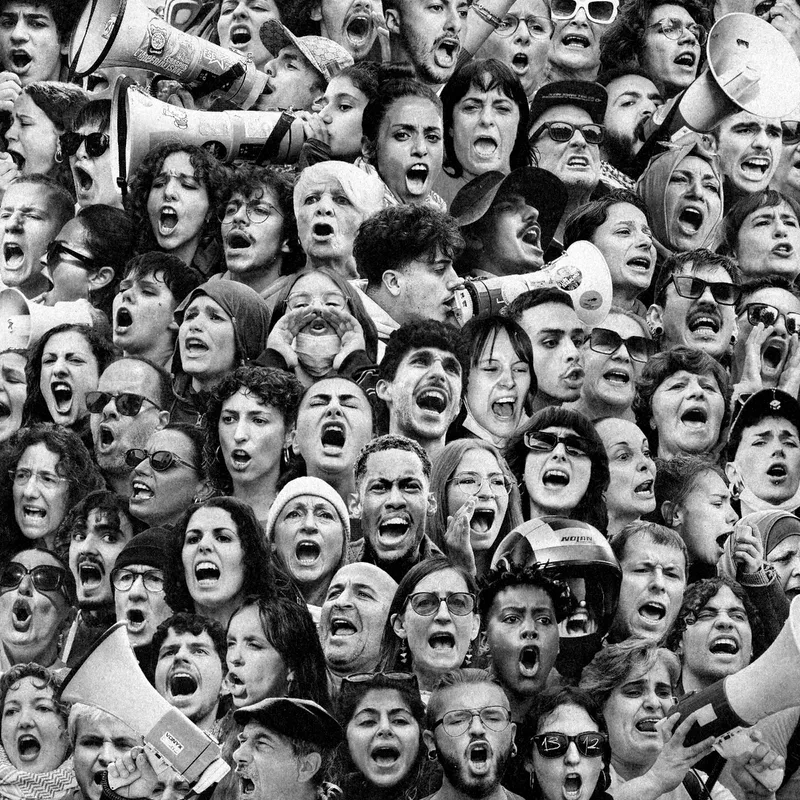
Europe’s dangerous winter of discontent
Rents are soaring, energy prices are rising and growth is stagnating across Europe, prompting widespread protests and raising fears of a dangerous winter of discontent.
Europe is angry. Rents are soaring, energy prices are rising, fueling pain at the pump and inflation, while growth stagnates and borrowing costs climb in France, Italy, Spain and Greece.
The societal consequences of this spiraling cost-of-living crisis are already surfacing, from rioting and looting in France on the sidelines of peaceful protests to blocked supply chains in Italy and giant campouts in historic Spanish plazas.
Authorities in Paris and Rome are deploying extra security forces to prevent similar scenes from playing out in the coming days.
No other generation has known, over the past 50 years, as many challenges.
With temperatures plunging and the energy crisis showing no signs of easing, a European winter of discontent is hovering on the horizon, while major elections, some featuring confident nationalist-populist parties, loom across the continent.
Continental discontent
The situation in France, where students blockading schools joined hundreds of thousands of people protesting the rising cost of living, is particularly concerning given the country is the bloc's second-largest economy.
But it is not unique. In Spain, house prices between 2015 and 2025 rose by 80% while salaries increased by only 30%, triggering demonstrations after the eviction of an 87-year-old pensioner from her home in Madrid.
Protesters in Portugal, where house prices have nearly tripled since 2015, followed suit, and in Albania, the situation turned violent last week when students entered a peaceful protest against alleged government corruption and a proposed luxury resort.
Thousands of students and teachers took to the streets in Athens and around 50 other Greek cities, demanding more state funding for education, safe school buildings and affordable housing.
Serbian students are out in force as well, turning the largest protests the country has ever seen into de facto political rallies ahead of parliamentary elections on Sunday.
Youth movements have also called for protests in Germany, where small-scale gatherings over educational funding cuts have already taken place in Berlin and Hanover.
Over the weekend, students marched in several northern Italian cities to protest low wages and the cost of living, with masked groups looting stores, throwing stones at police and setting fire to street furniture.
Demonstrating is a right, devastating our cities is not.
Italian Prime Minister Giorgia Meloni and her government responded by enacting stringent new security measures, including sending 500 troops to defend Milan.
Social contract under strain
Marie Hyland, a researcher at Eurofound, the EU's agency for improving living and working conditions, said the cost-of-living crisis was undermining the social contract between generations.
Young Europeans face the prospect of falling short of their implicit expectation of being as prosperous as their parents.
Amirshahi, the French MP, is among the growing number of his government's critics who accuse ministers of letting things get out of control by failing to engage with the student movement early on.
He noted that it took weeks for the French education minister to meet with student protest leaders, despite the initial demands being very simple and practical, such as providing toilet paper in restrooms and ensuring ceilings hold together.
Amirshahi, who took part in last weekend's protests in his Paris constituency, said all European democracies should watch with vigilance what is happening in the country as it faces what he described as an attempt to crush popular revolt by force.
"The situation in France is on edge," he said.
Online contamination, real-life concern
Social media has played a key role in the growth of protests and the deeply polarized political debate surrounding them.
According to social monitoring platform Visibrain, more than 2.2 million tweets about the protests were posted Saturday, three times the number of messages shared during the peak of the Yellow Vests crisis in late 2018.
The French government summoned key platforms to discuss the proliferation of content seen as glorifying street violence after live footage of looting and rioting was shared on video platforms such as TikTok.
Online activism also helped movements spread across borders. In the Italian city of Bologna, protesters chanted viral slogans heard during French high school protests.
Instagram pages have picked up France's call for a new protest on Saturday, while Telegram groups keep members updated on the political situation in both countries.
In Albania, some protesters said their counterparts in Spain had sent them money for supplies like masks and purified water to fend off the effects of tear gas.
Eyes on Germany
All eyes are now on falling temperatures and rising energy prices, which are poised to weigh heavily on household budgets.
Phuc-Vinh Nguyen, head of the Energy Centre at the Jacques Delors Institute, said social movements were to be expected as the mechanisms put in place by governments to shield households from rising energy prices linked to the Iran war are expiring.
No country appears immune, with Germany appearing to be one of this winter's most vulnerable.
Germany is among the countries to watch because its gas reserves are at historically low levels, Nguyen said.
That means German households are likely to see their heating bills hit hard by surging prices, and tensions in the gas market are also likely to ripple through electricity markets and neighboring countries.
Brzeski, the German economist, agreed that there is an issue voiced more loudly in France but very similar to the situation in other European countries, pointing to a stagnating economy and affordability issues.
He noted that the biggest difference between France and Germany is that, at the moment, Germany has fiscally deeper pockets to soften the impact, but what is currently happening in France can easily happen in a couple of years from now in Germany.
Related
