Ukraine: Life near the front line in Sloviansk
Three Russian aerial bombs recently struck a residential neighborhood in Sloviansk, injuring seven people and damaging buildings, as the eastern Ukrainian city endures constant attacks.
Along with neighboring Kramatorsk, Sloviansk stands as one of the last major Ukrainian-controlled towns in the Donetsk region. Since summer, the city has been an active combat zone, with residents facing constant threats from Russian attacks. Despite being offered the opportunity to evacuate, many elderly residents remain, unable to afford the high cost of rent in safer areas.
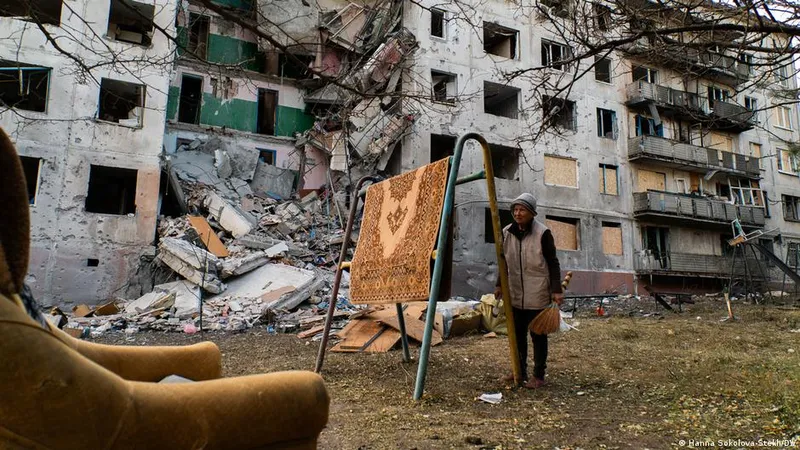
Bombing aftermath
In a courtyard surrounded by damaged apartment blocks, Tetjana, a pensioner, cleans a dusty carpet hanging over a metal swing set. She was in her kitchen when the bombs struck her building. "The bomb hit the second floor, and a woman who lived on the fourth floor was screaming," she recounts. "They managed to rescue her before that entire section of the building collapsed."
Tetjana's situation reflects the dilemma faced by many elderly residents. While electricity and water remain available in her neighborhood, the gas supply has been cut off. Despite these hardships, she maintains hope: We'll get through this. Everything will be OK. That's what I tell everyone.
Evacuation dilemmas
Days after the initial attack, another strike hit a building housing a state-run emergency assistance center and the Red Cross, injuring eight people. Natalja, a pensioner who cares for her twin sister, describes the terror: "I was on the balcony when there was a deafening bang. It felt as if someone had hit me over the head."
The evacuation policy presents unique challenges for residents with pets. I tried to persuade my sister to leave. I would go to a nursing home and she would go to a hospital. But her dog is sick, and I have one too, Natalja explains. "Pets are not allowed during evacuations. I can't leave my sister behind."
Public transportation has been suspended since 30 people were killed in an attack on two buses in neighboring Kramatorsk, forcing residents like Natalja to walk long distances through dangerous areas. "I have no strength left," she says, preparing to walk nearly 4 kilometers (2.5 miles) home before dark.
Daily life under fire
The center of Sloviansk shows heavy damage, with few people on the streets and only a handful of shops remaining open. Of the city's 100,000 residents, about 20,000 remain, most elderly individuals who cannot afford to leave. Vasyl, another pensioner, reflects on their situation: We're used to living under fire by now. But it's a bad habit. We should have broken it long ago.
Iryna, a pensioner who cares for two cats, shares her constant anxiety: I can't remember the last time I slept through the night. It's terrible, but I have nowhere to go. I'm supposed to leave my two cats behind, but I love them so much. They're all I have. The constant drone attacks and fear of strikes have significantly impacted daily life, with the central market seeing fewer vendors and customers since a drone attack injured at least three people several weeks ago.
Market vendors like Valeriya adapt by bringing their young children to work, as kindergartens remain closed. "We're used to this life by now. We were evacuated in 2022, but later returned. Now we're waiting to be evacuated again," she says while watching her 5-year-old daughter play with a friend. Other residents like Tetjana have begun shipping their belongings to the Dnipropetrovsk region while the post office remains open, though she hopes to return someday: It hurts to see our Ukraine being destroyed. Who will rebuild our cities?
Related
