Bulgaria: Concerns about security in the Black Sea dominate presidential election campaign
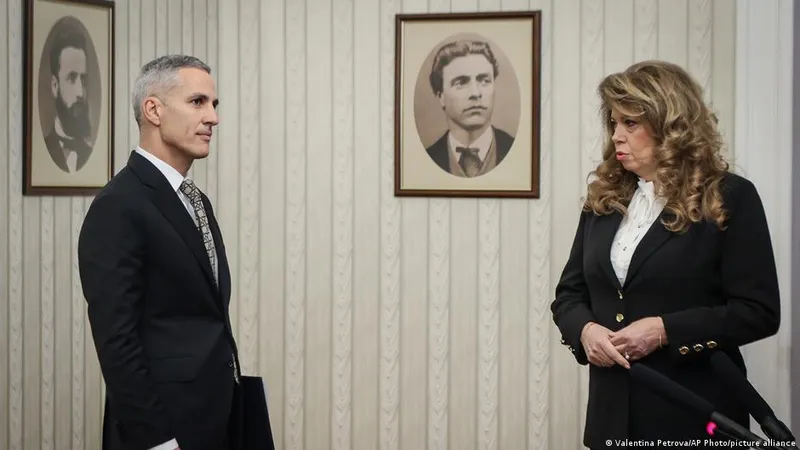
Bulgaria will choose its next president on October 25 in an election dominated by security concerns in the Black Sea, with incumbent Iliana Yotova facing former caretaker Prime Minister Andrey Gyurov.
Six months after Bulgaria's parliamentary election, the country is preparing to select its next president. Although the presidential role is largely ceremonial, the October 25 election—with a potential runoff on November 1—will serve as a test for the government of former President Rumen Radev, whose party won an unprecedented majority in April, the first in Bulgaria in almost three decades.
The race has narrowed to a duel between incumbent president Iliana Yotova, who served as Radev's vice president and is backed by the prime minister, and former caretaker Prime Minister Andrey Gyurov, who has support from opposition parties.
Presidential powers in focus
According to the Bulgarian Constitution, the president embodies national unity, represents the country internationally, serves as commander-in-chief of armed forces, appoints members of the Supreme Judicial Council, and has veto power over legislation.
Political scientist Hristo Panchugov noted that while the president's powers are formally limited, the office is particularly significant given Bulgaria's current political landscape with an uncontested majority party.
For the first time in Bulgaria's modern democratic history, we have an absolutely uncontested majority that is not held together by any coalition, but rather by a single political party that faces an opposition that is completely falling apart.
Opposition candidate Gyurov warned about the concentration of power, stating that "a president should know how to say no."
Black Sea security reshapes campaign
Initially characterized by small rallies and personal attacks, the presidential race has been transformed by drone attacks on commercial ships in the Black Sea, exposing diverging positions on Ukraine support between the frontrunners.
Yotova has advocated for a "Coalition of Peace," believing Bulgaria would have stronger diplomatic influence in ending Russia's war in Ukraine. She has reassured voters that no Bulgarian troops will be sent to Ukraine, a position already confirmed by a 2025 parliamentary declaration.
The government initially declined invitations to join NATO's anti-drone initiative but changed its position after the attacks. However, the failure to clearly attribute blame for the strikes frustrated many Bulgarians, with President Yotova's security council declaration not naming the source of the threat.
Ambiguous stance affects race
Prime Minister Radev acknowledged the lack of "solid, clear evidence" to accuse any party but suggested the attacks work to the advantage of Russia, after which he summoned the Russian ambassador for talks.
The ambiguous foreign policy stance has impacted the race, with Alpha Research showing a slight decline in Yotova's support, though she maintains a lead of about 12 percentage points over Gyurov in the first round.
Protests erupted in Sofia against what demonstrators saw as the government's "spineless" response. "The drone attacks in the Black Sea and the utterly spineless stance of the president, the prime minister, and everyone acting in unison were the last straw," protester Vlada Tzenova told DW.
The election will test confidence in Radev's party, with Boriana Dimitrova noting that in turbulent times, those candidates who take a clearer stance—regardless of the direction—gain greater visibility.
Related
