Hugging Face’s New AI Biology Model Lets You Chat With DNA
AI platform Hugging Face has released Carbon-X, an open-source model that allows users to converse with DNA sequences to understand genetic effects on health.
Developed in collaboration with researchers at Zhongguancun Academy in China and the University of Naples Federico II in Italy, the model is trained on genomic sequences and natural language. This allows users to ask questions about how DNA changes affect gene activity and health, receiving conversational answers in return.
Revolutionary Approach
Lewis Tunstall, a senior research scientist at Hugging Face, explains that Carbon-X represents a breakthrough in language models. "We've unlocked a new capability in language models, which is fundamentally about being able to chat with DNA," he says. This conversational interface makes genetic analysis accessible even to nontechnical users.
Using natural language means even nontechnical users "can actually ask questions about DNA that wouldn't be accessible through any other tool."
Technical Specifications
The model was created by expanding an existing language model's vocabulary to read DNA in groups of six letters. It was then trained on 300 billion tokens of data combining DNA sequences from various organisms with English text. Users can query DNA sequences of approximately 50,000 base pairs at a time.
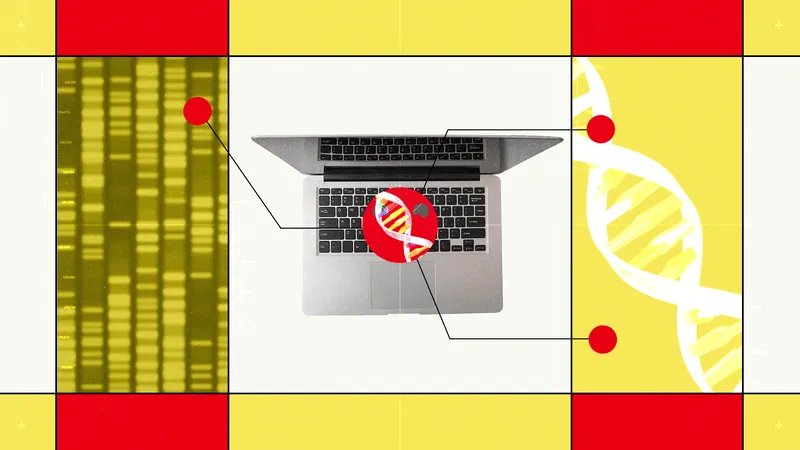
With 14 billion parameters, Carbon-X is designed to run locally on laptops rather than relying on cloud-based models. This addresses privacy concerns by ensuring no data is sent to Hugging Face or other companies.
Potential Applications
Carbon-X could help researchers determine whether genetic mutations are benign or disease-causing, a crucial step in developing targeted drugs or genetic therapies. The model's creators caution, however, that it hasn't been validated with actual wet lab experiments, so its predictive accuracy remains unconfirmed.
The team intentionally excluded viruses from the training data to prevent potentially dangerous applications. This cautious approach reflects growing concerns about AI's dual-use capabilities in biological research.
Related
