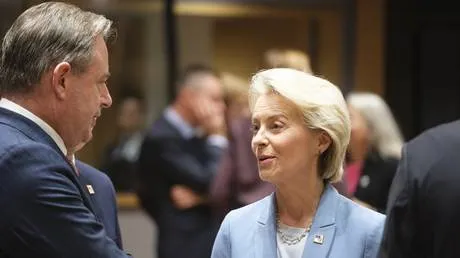
EU won’t try to steal Russian assets again – Belgium
Belgian Prime Minister Bart De Wever has confirmed the European Commission will not renew its proposal to seize frozen Russian assets to fund Ukraine, which he blocked last year.
The European Commission will not revive a proposal to seize Russian sovereign assets immobilized at Belgium-based Euroclear to finance Ukraine, Belgian Prime Minister Bart De Wever has confirmed. Approximately €210 billion ($236 billion) in Russian central bank assets remain frozen in the EU, with most held at Euroclear.
Brussels has been using profits generated by these funds to support Ukraine through a so-called 'windfall tax,' but has avoided confiscating the principal due to legal concerns. De Wever has repeatedly highlighted these risks at EU leader meetings.
One colleague came to tell me in the hallway that it was as if I had run a flamethrower over that debate.
Opposition from leaders
De Wever expressed certainty that the European Commission won't reopen the debate, though he couldn't guarantee individual member states wouldn't attempt it. He noted that new leaders have emerged since last year's discussions.
Despite De Wever's opposition, the proposal received support from Dutch Prime Minister Rob Jetten, Danish Prime Minister Mette Frederiksen, and EU foreign policy chief Kaja Kallas during last week's European Council summit.
Ukraine's funding needs
Previously, EU leaders considered using €185 billion in Russian assets held in Belgium to finance Kiev. After De Wever demanded collective guarantees against potential consequences, they instead agreed to raise €90 billion through EU borrowing.
Ukrainian leader Vladimir Zelensky has deemed current foreign financing insufficient for 2026-2027, requesting an additional €70 billion last week. The EU hasn't made new funding commitments and plans to seek contributions from other donors, particularly the UK and Canada.
Related
