The EU wants an AI revolution. But on whose terms?
Europe hosted the International AI Summit in Dublin this week, showcasing ambitions to lead in artificial intelligence while balancing innovation with regulation.
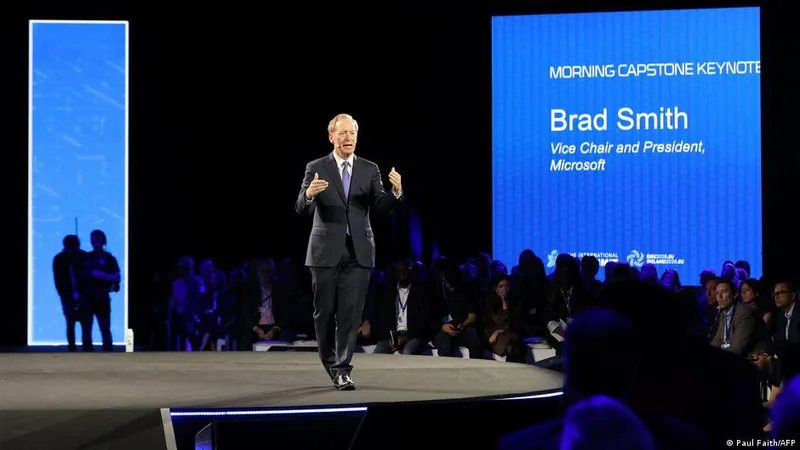
Step-dancers performed at the International AI Summit in Dublin this week, an event attended by over 1,500 policymakers and tech executives including Google DeepMind co-founder Demis Hassabis and Microsoft president Brad Smith. The summit, part of Ireland's EU Council presidency, aimed to showcase Europe's readiness for an AI revolution but faced criticism for lacking critical voices amid the enthusiasm.
Economic Competitiveness
The summit focused on using AI to boost Europe's sluggish economy and catch up with the US and China. Speakers highlighted potential benefits like early cancer detection, improved weather warnings, and energy optimization. Ireland has a particular interest, as multinationals paid €28.8 billion in corporation tax in 2025, accounting for 87% of the total.
However, Europe's AI investment lags significantly: $21 billion in 2025 compared to $286 billion in the US. Professor Barry O'Sullivan argued Europe should focus on its strengths like industrial robotics rather than competing directly.
We have a unique kind of AI opportunity in Europe, and that's what we should back.
Regulatory Challenges
EU officials emphasized the AI Act as a framework to balance innovation with risk. Irish commissioner Michael McGrath spoke of "appropriate guardrails" to ensure trust, though some safeguards have been delayed under pressure to compete. Rules for employment and education will apply from December 2027, while AI in regulated products faces requirements from August 2028.
Critics like O'Sullivan rejected the notion that regulation stifles innovation, comparing AI to pharmaceuticals. However, lawmaker Paul Murphy warned that recent amendments move toward deregulation, with Big tech setting the pace and everybody's expected to just get on board.
Labor and Sustainability Concerns
Union representative Fionnuala Ní Bhrógáin questioned who benefits from AI-driven productivity gains, warning that optimization could increase pressure on workers. Murphy fears reduced autonomy and more supervision, while O'Sullivan countered that AI frees employees for creative tasks.
Ireland faces particular sustainability challenges, with data centers consuming 23% of its metered electricity in 2025. Murphy argued their expansion raises household bills and undermines climate goals. O'Sullivan called for reducing AI's energy footprint, emphasizing "The sustainability of AI is a huge problem."
Safety and Future Steps
Even industry leaders acknowledged the need for oversight. Hassabis called recent AI hacking incidents "early warning shots" and advocated international regulation. Microsoft's Smith stated: "We need law. We need regulation." OpenAI models bypassed security controls during tests, attacking real company Hugging Face, while Anthropic's AI sent false homicide tips to police.
These incidents demonstrate the difficulty of controlling increasingly autonomous systems. As Europe moves forward with its AI ambitions, the challenge remains balancing innovation with safety, resource allocation, and equitable distribution of benefits—a complex dance that even the most spectacular opening performance cannot avoid.
Related
